 ChipApex | Global Electronic Components Supplier
SEARCH
Search Product
Search Post
— IC芯片 | 连接器 | 传感器 | 被动器件 —
Search productSearch post
— IC芯片 | 连接器 | 传感器 | 被动器件 —
Consult the customer manager about the wholesale price.
consultation hotline:86-132-6715-2157
email:[email protected]
Contact the product manager for consultation. One-stop consultation is available.
Do you want a lower wholesale price? Please send us your inquiry and we will reply immediately.
The Marvell 88E1514-A0-NNP2C000 is a single-port Gigabit Ethernet transceiver designed for commercial applications. It supports 10/100/1000BASE-T standards and utilizes SGMII to Copper or Copper to Fiber (1000BASE-X) operating modes. The device operates on a single 3.3V supply via an integrated switching voltage regulator, with I/O pads supporting 1.8V, 2.5V, or 3.3V LVCMOS standards. It features IEEE 802.3az-2010 Energy Efficient Ethernet (EEE), SyncE, PTP time stamping, and Advanced Virtual Cable Tester (VCT). The component is housed in a 56-pin QFN 8mm x 8mm Green package.
Verify the specific ordering suffix against official Marvell documentation to confirm package type and temperature grade. Ensure compatibility with system power requirements, as the device requires a single 3.3V supply when utilizing internal regulators. Confirm that the design accommodates the 56-pin QFN footprint and thermal dissipation needs.
Select this model specifically for designs requiring SGMII connectivity to copper media or fiber optics. Unlike other variants in the Alaska series, it does not support RGMII to Copper mode. Verify that the commercial temperature range meets application requirements, as industrial grades are available only in different part numbers within the same family.
This component belongs to the Marvell Alaska 88E151x series of physical layer devices. It shares core PHY capabilities with the 88E1510, 88E1518, and 88E1512 but differs in interface support and packaging. The 88E1514 is distinctively configured for SGMII-based MAC connections rather than direct RGMII copper links.
The 88E1512-A0-NNP2C000 serves as a functional substitute if the application requires RGMII to Copper support alongside SGMII options. Both share identical packages and EEE capabilities, though the 88E1512 offers broader interface flexibility.
No, the 88E1514 does not support RGMII to Copper mode; it is limited to SGMII to Copper and Copper to Fiber configurations.
The device can operate using a single 3.3V supply by utilizing its integrated switching voltage regulator to generate all necessary internal voltages.
The Advanced Virtual Cable Tester uses Time Domain Reflectometry (TDR) technology to remotely identify cable malfunctions, such as opens, shorts, or impedance mismatches, reporting the distance to the fault.
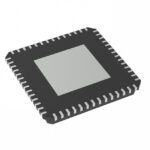 88E1514-A0-NNP2C000
The activity of extra discounts on wholesale prices is in full swing…
Please fill in your contact information and we will send you the latest wholesale price list.





