 ChipApex | Global Electronic Components Supplier
SEARCH
Search Product
Search Post
— IC芯片 | 连接器 | 传感器 | 被动器件 —
Search productSearch post
— IC芯片 | 连接器 | 传感器 | 被动器件 —
Consult the customer manager about the wholesale price.
consultation hotline:86-132-6715-2157
email:[email protected]
Contact the product manager for consultation. One-stop consultation is available.
Do you want a lower wholesale price? Please send us your inquiry and we will reply immediately.
The Marvell 88E1518-A0-NNB2C000 is a single-port Gigabit Ethernet transceiver designed for the physical layer of 10/100/1000BASE-T networks. It operates with a single 3.3V supply and supports only 1.8V LVCMOS I/O standards. The device integrates MDI termination resistors and an internal switching voltage regulator, eliminating external passive components. It connects to MACs via RGMII and supports IEEE 802.3az Energy Efficient Ethernet (EEE) with buffering for legacy devices. Key features include SyncE clock recovery, IEEE 1588v2 PTP timestamping, and advanced Virtual Cable Tester (VCT) diagnostics.
Verify that the host system strictly provides a 1.8V logic level for all RGMII interface connections, as this specific part number does not support 2.5V or 3.3V I/O voltages. Confirm that the design utilizes the internal switching regulator powered by a single 3.3V rail to match the datasheet specifications. Ensure the application environment remains within commercial temperature limits.
Select the 88E1518 when the design requires a single-port Gigabit PHY with RGMII connectivity and strict 1.8V I/O compatibility. This model is distinct from the 88E1510, which supports higher I/O voltages, and the 88E1512, which offers SGMII interfaces. Choose this variant for applications prioritizing low power consumption through EEE and simplified PCB routing via integrated termination resistors.
This component belongs to the Marvell Alaska family of Gigabit Ethernet transceivers. It shares core architectural features with the 88E1510, 88E1512, and 88E1514 models but is differentiated by its exclusive support for 1.8V LVCMOS I/O standards. It serves as the commercial-grade counterpart in the series, optimized for cost-effective enterprise and consumer deployments.
The 88E1510-A0-NNB2C000 is a functional substitute if the host MAC supports 1.8V I/O levels; otherwise, the 88E1510's 2.5V/3.3V capability makes it incompatible without level shifting. The 88E1512 and 88E1514 are not direct replacements due to their different package sizes and SGMII interface capabilities.
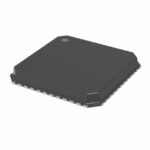 88E1518-A0-NNB2C000
The activity of extra discounts on wholesale prices is in full swing…
Please fill in your contact information and we will send you the latest wholesale price list.





