 ChipApex | Global Electronic Components Supplier
SEARCH
Search Product
Search Post
— IC芯片 | 连接器 | 传感器 | 被动器件 —
Search productSearch post
— IC芯片 | 连接器 | 传感器 | 被动器件 —
Consult the customer manager about the wholesale price.
consultation hotline:86-132-6715-2157
email:[email protected]
Contact the product manager for consultation. One-stop consultation is available.
Do you want a lower wholesale price? Please send us your inquiry and we will reply immediately.
The Marvell 88E3015-A2-NNP1C000 is a single-channel Fast Ethernet PHY transceiver supporting IEEE 802.3u standards for 10BASE-T and 100BASE-TX networks over twisted-pair cabling. It operates in full-duplex or half-duplex modes with integrated Auto-Negotiation capabilities. The device interfaces with MACs via Reduced Gigabit Media Independent Interface (RGMII) or Media Independent Interface (MII). Manufactured using a 0.15 μm CMOS process, it utilizes DSP-based technology for low power dissipation. Key features include Virtual Cable Tester® (VCT™) technology for cable analysis, automatic MDI/MDIX crossover, and support for Jumbo frames up to 10 Kbytes.
Verify the specific ordering suffix against the manufacturer's official documentation to ensure correct package type and temperature grade. Confirm that the component meets all required environmental compliance standards for the intended deployment environment before finalizing procurement orders.
Select this component for applications requiring a cost-effective, single-port Fast Ethernet solution with RGMII or MII connectivity. Consider the 88E3018 variant if JTAG boundary scan testing or industrial-grade temperature specifications are required, as these features are not available in the 88E3015 model.
This device belongs to the Marvell Alaska F family of physical layer transceivers. It represents the fourth generation of Marvell's DSP-based Fast Ethernet solutions, designed to offer high integration and low power consumption compared to previous generations.
The 88E3018 serves as a pin-compatible upgrade option within the same package families, offering additional JTAG support. Ensure any replacement maintains compatibility with the existing RGMII/MII interface timing and voltage levels.
No, the 88E3015 does not support IEEE 1149.1 JTAG Standard Test Access Port and Boundary Scan; this feature is exclusive to the 88E3018 device.
The device supports Jumbo frames up to 10 Kbytes with up to ±150 ppm clock frequency difference.
Yes, the device supports a mode of operation for IEEE compliant 100BASE-FX fiber-optic networks using a PECL interface.
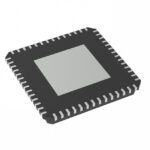 88E3015-A2-NNP1C000
The activity of extra discounts on wholesale prices is in full swing…
Please fill in your contact information and we will send you the latest wholesale price list.






