ChipApex | Global Electronic Components Supplier
SEARCH
Search Product
Search Post
— IC芯片 | 连接器 | 传感器 | 被动器件 —
Search productSearch post
— IC芯片 | 连接器 | 传感器 | 被动器件 —
Consult the customer manager about the wholesale price.
consultation hotline:86-132-6715-2157
email:[email protected]
Contact the product manager for consultation. One-stop consultation is available.
Do you want a lower wholesale price? Please send us your inquiry and we will reply immediately.
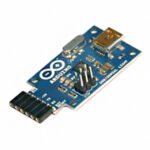
The Arduino USB 2 Serial Micro (A000107) is a hardware adapter that converts a computer's USB connection into 5-volt serial TX and RX lines. It utilizes an ATmega16U2 microcontroller programmed as a USB-to-serial converter, identical to the chip found on the Arduino Uno. The device features an onboard mini-USB connector and a 5-pin header exposing RX, TX, 5V, Ground, and Reset pins. An onboard polyfuse limits current to 500mA for host protection. Status LEDs indicate power and data activity.
Verify the specific revision of the ATmega16U2 firmware when sourcing replacements, as driver requirements vary by operating system. Windows installations require a dedicated .inf file provided in the official documentation package. Ensure the receiving board operates at 5-volt logic levels to prevent damage, as this adapter does not support 3.3-volt logic conversion.
Select this adapter when a project requires a standalone USB-to-serial bridge for 5-volt logic systems. It is suitable for legacy boards lacking native USB ports. For 3.3-volt logic environments, such as those using the Arduino Zero or GIGA R1 WiFi, this unit is incompatible due to voltage mismatch. Consider boards with native USB if space constraints preclude external adapters.
This component belongs to the Arduino accessory ecosystem designed to facilitate development for boards without built-in USB capabilities. It serves as a direct replacement for older FTDI-based adapters in compatible setups. The design mirrors the interface standards established by early Arduino models, ensuring broad compatibility within the open-source hardware community.
Compatible substitutes include third-party clones utilizing the CH340G or CP2102 chips, though these require different drivers. Direct functional equivalents must maintain 5-volt logic levels and expose RX/TX/Reset/GND/5V pins. Verify pinout compatibility with standard FTDI headers before substitution.
 A000107
The activity of extra discounts on wholesale prices is in full swing…
Please fill in your contact information and we will send you the latest wholesale price list.