 ChipApex | Global Electronic Components Supplier
SEARCH
Search Product
Search Post
— IC芯片 | 连接器 | 传感器 | 被动器件 —
Search productSearch post
— IC芯片 | 连接器 | 传感器 | 被动器件 —
Consult the customer manager about the wholesale price.
consultation hotline:86-132-6715-2157
email:[email protected]
Contact the product manager for consultation. One-stop consultation is available.
Do you want a lower wholesale price? Please send us your inquiry and we will reply immediately.
The A3940KLW is a discontinued brushed DC motor driver manufactured by Allegro MicroSystems. It operates within a supply voltage range of 7V to 40V and utilizes power MOSFET technology. The device is housed in a 28-SOIC package with a width of 7.50mm. Designed for automotive-grade applications, it supports an operating temperature range from -40°C to 135°C. The component functions as a controller for commutation and direction management, featuring parallel interface capabilities.
This component has reached end-of-life status and is no longer in production. Procurement should focus on verifying the availability of qualified substitute parts rather than sourcing the original model. Ensure that any replacement maintains compatibility with the required 7V to 40V supply range and 28-pin form factor. Validate that alternative components meet the same automotive-grade specifications and thermal performance requirements for the intended application environment.
Selection of this specific part number is restricted due to its obsolete status. Designers must evaluate equivalent devices that offer similar voltage ratings and package dimensions. Consider the transition to newer generations within the A394x family or comparable drivers that support parallel interfaces. Verify that selected substitutes provide adequate thermal dissipation for the 28-SOIC footprint and maintain the necessary current handling capabilities for the target motor load.
The A3940KLW belongs to the A3940 product family, which specializes in integrated motor driver solutions. This series is characterized by its ability to manage complex motor control tasks through a single IC. The KLW suffix denotes the specific 28-SOIC package variant. As an automotive-grade component, it aligns with industry standards for durability and performance in vehicle electronics.
The A3941KLPTR-T is identified as a parameter-equivalent substitute for the A3940KLW. This alternative offers similar functional characteristics and may require pin-to-pin compatibility verification. Engineers should review the datasheet differences between the two models to ensure seamless integration into existing designs.
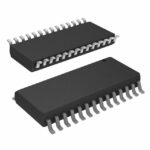 A3940KLW
The activity of extra discounts on wholesale prices is in full swing…
Please fill in your contact information and we will send you the latest wholesale price list.





