 ChipApex | Global Electronic Components Supplier
SEARCH
Search Product
Search Post
— IC芯片 | 连接器 | 传感器 | 被动器件 —
Search productSearch post
— IC芯片 | 连接器 | 传感器 | 被动器件 —
Consult the customer manager about the wholesale price.
consultation hotline:86-132-6715-2157
email:[email protected]
Contact the product manager for consultation. One-stop consultation is available.
Do you want a lower wholesale price? Please send us your inquiry and we will reply immediately.
The A3949SLBTR-T is a DMOS full-bridge motor driver designed for brushed DC motor applications. It operates on a single supply voltage ranging from 8V to 36V and delivers an output current of 2.8A. The device features low RDS(ON) outputs for efficient power handling and includes integrated protections such as thermal shutdown, crossover current protection, and internal under-voltage lockout (UVLO). Packaged in a 16-pin eTSSOP with an exposed pad for enhanced thermal dissipation, it supports surface-mount installation and functions within a junction temperature range of -20°C to 150°C.
Verify component authenticity through authorized Allegro MicroSystems distributors or certified partners. Confirm the specific tape-and-reel packaging configuration matches design requirements. Ensure ESD handling protocols are followed during storage and assembly. Cross-reference the exact suffix with official datasheets to confirm pinout and thermal pad specifications. Validate that the source documentation aligns with the requested part number before finalizing procurement orders.
Select this component for applications requiring high current density in a minimal footprint. The exposed pad design facilitates effective heat transfer to the PCB copper plane. Consider the 36V maximum rating when designing power supplies. Evaluate thermal management strategies given the 150°C junction limit. This driver suits systems where integrated protection reduces external component count compared to discrete solutions.
This part belongs to the A3949 series of DMOS motor drivers from Allegro MicroSystems. It represents a fully integrated solution combining logic and power stages. The series is engineered for cost-effective brushed DC motor control. The device utilizes advanced DMOS technology to achieve low on-resistance. It serves as a compact alternative to multi-chip motor control architectures.
The A3950SLPTR-T is documented as a parameter-equivalent replacement option. Verify compatibility regarding package dimensions and thermal characteristics. Confirm electrical parameters match system requirements before substitution.
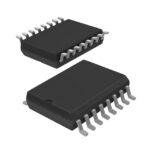 A3949SLBTR-T
The activity of extra discounts on wholesale prices is in full swing…
Please fill in your contact information and we will send you the latest wholesale price list.





