 ChipApex | Global Electronic Components Supplier

SEARCH
Search Product
Search Post
— IC芯片 | 连接器 | 传感器 | 被动器件 —
Search productSearch post
— IC芯片 | 连接器 | 传感器 | 被动器件 —
Consult the customer manager about the wholesale price.
consultation hotline:86-132-6715-2157
email:[email protected]
Contact the product manager for consultation. One-stop consultation is available.
Do you want a lower wholesale price? Please send us your inquiry and we will reply immediately.
The A3PN250-1VQ100 is a ProASIC3 nano Flash FPGA manufactured by Microchip Technology. It features 250,000 system gates and 68 user I/Os in a 100-VQFP package. The device operates with a core supply voltage range of 1.425 V to 1.575 V and supports mixed-voltage I/O standards including 1.5 V, 1.8 V, 2.5 V, and 3.3 V. It includes up to 36 kbits of True Dual-Port SRAM and six CCC blocks with integrated PLL capabilities. The component supports system performance up to 350 MHz and functions within an industrial temperature range of -20°C to +85°C.
Verify the specific suffix designation against official Microchip documentation to confirm exact electrical characteristics and temperature ratings. Ensure compatibility with existing PCB footprints for the 100-VQFP package. Confirm moisture sensitivity level handling requirements during assembly. Check for any recent Product Change Notices regarding manufacturing or packaging updates before finalizing procurement orders.
Select this model when non-volatile configuration retention is required without external memory devices. Compare gate density and I/O count against alternative ProASIC3 variants like the A3PN125 or A3PN250Z if cost optimization is necessary. Evaluate power consumption profiles against SRAM-based FPGAs for low-power applications. Verify that the 1.5 V core voltage aligns with the target system's power delivery network constraints.
This component belongs to the ProASIC3 nano family, which utilizes a 130-nm flash process. It offers pin-compatible packages across the series, facilitating design upgrades within the same footprint. The family emphasizes low power consumption and high reliability for embedded applications. Microchip Technology provides comprehensive development tools and software support for this FPGA architecture.
Direct pin-compatible substitutes within the ProASIC3 nano family include the A3PN250-1VQG100. Cross-family replacements may require schematic and layout modifications due to differences in I/O counts and power requirements. Verify functional equivalence for critical timing and security features when considering alternative manufacturers.

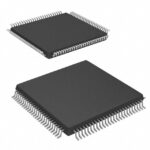 A3PN250-1VQ100

The activity of extra discounts on wholesale prices is in full swing…
Please fill in your contact information and we will send you the latest wholesale price list.




