 ChipApex | Global Electronic Components Supplier

SEARCH
Search Product
Search Post
— IC芯片 | 连接器 | 传感器 | 被动器件 —
Search productSearch post
— IC芯片 | 连接器 | 传感器 | 被动器件 —
Consult the customer manager about the wholesale price.
consultation hotline:86-132-6715-2157
email:[email protected]
Contact the product manager for consultation. One-stop consultation is available.
Do you want a lower wholesale price? Please send us your inquiry and we will reply immediately.
The A40MX02-3PLG44I is a Field Programmable Gate Array (FPGA) from the Microchip MX series, manufactured by Microchip Technology. It features approximately 3,000 system gates and 295 Logic Elements (LEs). The device operates with dual voltage supplies: 3.3V (range 3.0V to 3.6V) and 5.0V (range 4.75V to 5.25V). It utilizes an anti-fuse technology architecture for non-volatile configuration. The component is housed in a 44-pin Plastic Leadless Chip Carrier (PLCC) package with J-leads. It supports industrial temperature ranges from -40°C to +85°C and includes on-chip memory for configuration storage.
Verify the specific suffix 'I' indicates the industrial temperature range (-40°C to +85°C) compared to commercial variants. Confirm the package type matches the 44-pin PLCC specification. Ensure the ordering code aligns with current Microchip Technology production status. Check for any recent Product Change Notifications (PCNs) regarding assembly sites or material compliance updates prior to procurement.
Select this model when a non-volatile FPGA solution is required to eliminate external configuration memory components. Consider the 3,000 gate count for moderate complexity logic designs. Evaluate the trade-off between the higher speed grade '3' and power consumption against lower speed options. Ensure the design accommodates the specific pinout and thermal characteristics of the PLCC-44 package.
This component belongs to the Actel/Microchip MX family of anti-fuse FPGAs, known for their security and simplicity. It serves as a successor to earlier CPLD technologies, offering greater flexibility while maintaining the robustness associated with anti-fuse structures. The MX series is widely recognized in industries prioritizing long-term availability and resistance to single-event upsets.
Direct replacements may include other devices within the A40MX02 series with different speed grades or packages, such as A40MX02-1PLG44I. Cross-family migration to PolarFire or IGloo2 requires significant redesign due to architectural differences. Verify pin-to-pin compatibility if substituting with similar PLCC packages from other manufacturers.


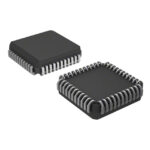 A40MX02-3PLG44I

The activity of extra discounts on wholesale prices is in full swing…
Please fill in your contact information and we will send you the latest wholesale price list.



