 ChipApex | Global Electronic Components Supplier

SEARCH
Search Product
Search Post
— IC芯片 | 连接器 | 传感器 | 被动器件 —
Search productSearch post
— IC芯片 | 连接器 | 传感器 | 被动器件 —
Consult the customer manager about the wholesale price.
consultation hotline:86-132-6715-2157
email:[email protected]
Contact the product manager for consultation. One-stop consultation is available.
Do you want a lower wholesale price? Please send us your inquiry and we will reply immediately.
The A42MX09-PL84M is a field-programmable gate array (FPGA) from the Microchip MX series, designed as a single-chip ASIC alternative for automotive applications. It features 14,000 system gates and supports mixed-voltage operation with supply voltages ranging from 3V to 3.6V or 4.75V to 5.25V. The device is housed in an 84-pin PLCC package and operates within a commercial temperature range of 0°C to 70°C. Key specifications include up to 2.5 kbits of configurable dual-port SRAM, fast wide-decode circuitry, and support for up to 100% resource utilization and pin fixing.
Verify component authenticity against Microchip Technology standards due to potential obsolescence risks associated with legacy FPGA families. Confirm that the specific suffix corresponds to the intended voltage and temperature grade. Ensure compliance with RoHS and REACH regulations as documented in the official datasheet. Check for any active Product Change Notifications (PCNs) affecting assembly sites or material composition prior to procurement.
Select this model when a compact 84-pin form factor is required alongside 14,000 system gates. Consider the mixed-voltage capability if the design interface requires both 3.3V and 5V signaling without level shifters. Verify that the commercial temperature range meets the operational environment requirements. Evaluate the available SRAM resources against the specific memory allocation needs of the target application logic.
This component belongs to the A42MX family of FPGAs, which are positioned as cost-effective alternatives to application-specific integrated circuits. The MX series emphasizes ease of integration and deterministic performance. The A42MX09 variant specifically targets applications needing moderate logic density with flexible I/O configurations in a small footprint.
Publicly confirmed substitute part numbers for the A42MX09-PL84M are not available in the provided documentation. Designers should consult Microchip Technology for current lifecycle status and recommended migration paths to newer FPGA families.
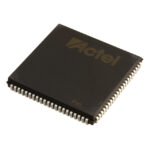 A42MX09-PL84M

The activity of extra discounts on wholesale prices is in full swing…
Please fill in your contact information and we will send you the latest wholesale price list.






