 ChipApex | Global Electronic Components Supplier

SEARCH
Search Product
Search Post
— IC芯片 | 连接器 | 传感器 | 被动器件 —
Search productSearch post
— IC芯片 | 连接器 | 传感器 | 被动器件 —
Consult the customer manager about the wholesale price.
consultation hotline:86-132-6715-2157
email:[email protected]
Contact the product manager for consultation. One-stop consultation is available.
Do you want a lower wholesale price? Please send us your inquiry and we will reply immediately.
The A42MX09-TQ176A is a high-capacity Field Programmable Gate Array (FPGA) from the Microsemi MX family, designed as a single-chip ASIC alternative. It features approximately 14,000 system gates and 684 Configurable Logic Blocks (CLBs). The device supports mixed-voltage operation with supply ranges of 3V to 3.6V or 4.5V to 5.5V. It integrates up to 2.5 kbits of configurable dual-port SRAM and offers up to 104 user-programmable I/O pins in a 176-pin TQFP package. Performance specifications include a maximum clock frequency of 250 MHz and a typical CLB combinational delay of 1.6 ns.
Verify component authenticity by checking manufacturer markings against official datasheets. Confirm RoHS compliance status, as older MX series variants may not meet current environmental standards. Ensure proper handling procedures are followed due to Moisture Sensitivity Level 3 classification. Validate that the specific suffix matches the required voltage and temperature grades for your application environment.
Select this model when a cost-effective FPGA solution replacing complex discrete logic is required. Consider the 176-pin TQFP package for surface-mount assembly constraints. Evaluate the 14,000 gate count against design complexity to ensure sufficient resources. Verify that the 250 MHz performance meets signal processing requirements before finalizing the part selection.
The A42MX09 belongs to the Microsemi 40MX and 42MX FPGA families, which are positioned as high-capacity, single-chip solutions. These devices bridge the gap between traditional CPLDs and larger FPGAs, offering high performance while shortening development cycles. The MX series is known for consolidating logic previously implemented across multiple chips into a single component.
Direct replacements within the same package and pinout include other A42MX09 variants such as A42MX09-1TQ176I or A42MX09-VQG100A if pin counts differ. Cross-family migration to PolarFire or IGLOO2 may be necessary for updated RoHS compliance or lower power requirements, though these require schematic redesign.

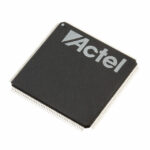 A42MX09-TQ176A

The activity of extra discounts on wholesale prices is in full swing…
Please fill in your contact information and we will send you the latest wholesale price list.



