 ChipApex | Global Electronic Components Supplier

SEARCH
Search Product
Search Post
— IC芯片 | 连接器 | 传感器 | 被动器件 —
Search productSearch post
— IC芯片 | 连接器 | 传感器 | 被动器件 —
Consult the customer manager about the wholesale price.
consultation hotline:86-132-6715-2157
email:[email protected]
Contact the product manager for consultation. One-stop consultation is available.
Do you want a lower wholesale price? Please send us your inquiry and we will reply immediately.
The A42MX16-3PLG84I is a Field Programmable Gate Array (FPGA) from the Microchip MX Automotive family, designed as a single-chip ASIC alternative for automotive applications. It features 24,000 system gates and utilizes CMOS technology in a Plastic Quad Flatpack No-Lead (PQFN) package with 84 pins. The device supports dual voltage operation at 3.3 V and 5.0 V, ensuring compatibility with mixed-voltage systems. It includes up to 2.5 kbits of configurable dual-port SRAM and fast wide-decode circuitry. The component operates within an industrial temperature range of -40°C to +85°C and supports IEEE Standard 1149.1 JTAG boundary scan testing.
Verify RoHS compliance status and specific suffix designations against the official Microchip datasheet, as environmental certifications may vary by production batch. Confirm that the PQFN-84 package matches the target PCB footprint requirements. Ensure the selected speed grade meets the system's maximum clock frequency needs, as performance varies across the MX family variants.
Select this model when a cost-effective solution replacing multiple discrete logic devices is required for automotive or industrial environments. The 24,000 gate capacity suits moderate complexity designs. Verify that the 3.3V/5.0V mixed-voltage I/O capabilities align with the connected peripheral interface standards. Consider the 84-pin package constraints for available routing space on the final assembly.
This component belongs to the Microchip A42MX series, which provides non-volatile FPGA technology tailored for harsh environments. The series bridges the gap between programmable logic and custom ASICs, offering reconfigurability with fixed timing characteristics. It is part of the broader Actel heritage integrated into Microchip's portfolio, focusing on low power and high reliability.
Direct replacements include other members of the A42MX family such as the A42MX08 or A42MX32, depending on gate density requirements. Cross-family migration to Actel SmartFusion or IGLOO2 requires significant architectural redesign due to differences in fabric structure and memory architecture.
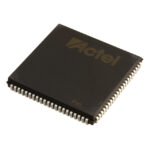 A42MX16-3PLG84I

The activity of extra discounts on wholesale prices is in full swing…
Please fill in your contact information and we will send you the latest wholesale price list.







