 ChipApex | Global Electronic Components Supplier

SEARCH
Search Product
Search Post
— IC芯片 | 连接器 | 传感器 | 被动器件 —
Search productSearch post
— IC芯片 | 连接器 | 传感器 | 被动器件 —
Consult the customer manager about the wholesale price.
consultation hotline:86-132-6715-2157
email:[email protected]
Contact the product manager for consultation. One-stop consultation is available.
Do you want a lower wholesale price? Please send us your inquiry and we will reply immediately.
The A42MX16-PQ208M is a Field Programmable Gate Array (FPGA) from the Microchip MX family, designed as a high-capacity single-chip ASIC alternative. It features 295 Configurable Logic Blocks (CLBs) and approximately 2,000 system gates. The device supports mixed-voltage operation with 3.3V or 5.0V core and I/O supplies. It utilizes a 208-pin Plastic Quad Flat Package (PQFP) with a fine-pitch form factor. Key electrical specifications include a maximum clock frequency of 48.24 MHz and a CLB delay of 3.72 ns. The component operates within a temperature range of -55°C to +125°C and has a Moisture Sensitivity Level (MSL) of 3.
Verify end-of-life status carefully, as this part number belongs to an older generation FPGA family that may be subject to discontinuation notices. Confirm current availability through authorized distributors and check for any Product Change Notifications (PCNs) regarding assembly sites or software updates. Ensure design-in timelines account for potential supply constraints associated with legacy programmable logic devices.
Select this component when designing systems requiring moderate logic density with robust environmental tolerance. The PQFP-208 package is suitable for applications where surface mount technology is required but ball grid arrays are not preferred. Consider the specific voltage requirements of the target application, as the device supports both 3.3V and 5.0V operations, offering flexibility in power domain integration.
This device is part of the broader 40MX and 42MX FPGA families manufactured by Microchip Technology (formerly Actel/Microsemi). These families are characterized by their flash-based non-volatile architecture, which allows for instant-on functionality without external configuration memory. The A42MX16 variant specifically targets mid-range complexity designs, bridging the gap between smaller CPLDs and larger high-density FPGAs.
Direct replacements should be sought within the same MX family, such as the A42MX16-PQG208 variants, noting that suffix changes may indicate different temperature grades or packaging options. Cross-referencing with newer Microchip FPGA families like PolarFire or IGLOO2 is recommended for long-term sustainability, though pin-to-pin compatibility is not guaranteed.
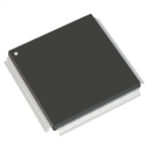 A42MX16-PQ208M

The activity of extra discounts on wholesale prices is in full swing…
Please fill in your contact information and we will send you the latest wholesale price list.





