 ChipApex | Global Electronic Components Supplier

SEARCH
Search Product
Search Post
— IC芯片 | 连接器 | 传感器 | 被动器件 —
Search productSearch post
— IC芯片 | 连接器 | 传感器 | 被动器件 —
Consult the customer manager about the wholesale price.
consultation hotline:86-132-6715-2157
email:[email protected]
Contact the product manager for consultation. One-stop consultation is available.
Do you want a lower wholesale price? Please send us your inquiry and we will reply immediately.
The A42MX24-2PQG208 is a Field Programmable Gate Array (FPGA) from the Microchip Technology MX family. It features 36,000 system gates and 912 Logic Elements (LEs). The device provides 176 user-programmable I/O pins and operates within a supply voltage range of 4.5 V to 5.5 V, with a nominal operating voltage of 5 V. It supports mixed-voltage operation for core and I/Os. The component is housed in a 208-pin PQFP package and is designed for surface mount installation. It supports IEEE Standard 1149.1 JTAG boundary scan testing.
Verify current availability status as discontinuation notices may apply to specific suffixes or manufacturing sites. Confirm RoHS compliance and moisture sensitivity level requirements prior to procurement. Ensure compatibility with existing PCB footprints for the 208-PQFP package. Review latest Product Change Notices for assembly site updates or software toolchain modifications that may affect production readiness.
Select this model when 36,000 system gates and 176 I/Os are required within a 208-pin form factor. Verify that the 5V core voltage aligns with the target system power rails. Consider the 208-PQFP package dimensions against available board space. Evaluate if the specific speed grade meets timing constraints for the intended clock frequencies. Check for necessary environmental certifications if deploying in automotive or military sectors.
This component belongs to the A42MX series of SRAM-based FPGAs manufactured by Microchip Technology, formerly Actel. The MX family is characterized by its non-volatile configuration memory and low power consumption compared to traditional volatile FPGAs. These devices are engineered to replace complex ASICs in various high-reliability industries, offering flexibility during development and deployment phases without sacrificing performance or determinism.
Publicly confirmed substitute part numbers for the A42MX24-2PQG208 were not identified in the provided source material. Users should consult official Microchip documentation for potential obsolescence management strategies or direct replacements within the same product family.
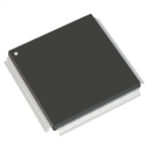 A42MX24-2PQG208

The activity of extra discounts on wholesale prices is in full swing…
Please fill in your contact information and we will send you the latest wholesale price list.





