 ChipApex | Global Electronic Components Supplier

SEARCH
Search Product
Search Post
— IC芯片 | 连接器 | 传感器 | 被动器件 —
Search productSearch post
— IC芯片 | 连接器 | 传感器 | 被动器件 —
Consult the customer manager about the wholesale price.
consultation hotline:86-132-6715-2157
email:[email protected]
Contact the product manager for consultation. One-stop consultation is available.
Do you want a lower wholesale price? Please send us your inquiry and we will reply immediately.
The A42MX24-FPQG208 is a non-volatile Field Programmable Gate Array (FPGA) from the Microchip MX family, designed as a single-chip ASIC alternative. It features 912 Logic Elements and approximately 36,000 system gates within a 208-pin Fine-Pitch Quad Flat Package (FPQFP). The device operates on a 5V supply voltage with a range of 4.75V to 5.25V. It supports up to 176 user-programmable I/O pins and includes fast wide-decode circuitry for ease of integration. The architecture allows for 100% resource utilization and pin fixing, supporting deterministic timing and low power consumption suitable for automotive and industrial applications.
Verify the exact suffix 'FPQG208' against official Microchip documentation, as standard listings often use 'PQG208'. Confirm RoHS compliance status and moisture sensitivity level prior to ordering. Check for active obsolescence notices or production change notifications (PCN) affecting this specific part number. Ensure ECAD models match the physical footprint requirements of your design.
Select this component when a non-volatile FPGA with 5V operation is required. Compare logic density against the A42MX16 and A42MX36 if gate count requirements differ. Verify package availability, as FPQFP may have limited stock compared to standard PQFP. Consider thermal performance and I/O voltage levels if interfacing with 3.3V devices, noting mixed-voltage support capabilities.
The A42MX24 belongs to the Microsemi/Microchip MX family of flash FPGAs, bridging the gap between CPLDs and larger FPGAs. It shares architectural similarities with the A40MX series but offers higher capacity. This part is part of the legacy Actel portfolio acquired by Microchip, known for its security and non-volatile nature. It serves as a drop-in replacement for many complex PALs and GALs.
Direct substitutes include the A42MX24-PQG208 and A42MX24-TQG208, differing primarily in temperature grade and package type. The A40MX24 is an older generation equivalent with similar gate counts but different performance characteristics. Verify pin compatibility and software toolchain support before transitioning to these alternatives.
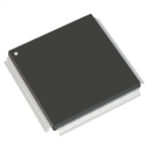 A42MX24-FPQG208

The activity of extra discounts on wholesale prices is in full swing…
Please fill in your contact information and we will send you the latest wholesale price list.





