 ChipApex | Global Electronic Components Supplier

SEARCH
Search Product
Search Post
— IC芯片 | 连接器 | 传感器 | 被动器件 —
Search productSearch post
— IC芯片 | 连接器 | 传感器 | 被动器件 —
Consult the customer manager about the wholesale price.
consultation hotline:86-132-6715-2157
email:[email protected]
Contact the product manager for consultation. One-stop consultation is available.
Do you want a lower wholesale price? Please send us your inquiry and we will reply immediately.
The A42MX24-PQ208A is a Field Programmable Gate Array (FPGA) from the Microchip A42MX24 series, manufactured by Microchip Technology. It features 912 Logic Elements and 36,000 system gates within a PQFP-208 package. The device supports mixed-voltage operation with a supply voltage range of 4.5 V to 5.5 V, typically operating at 5 V. It provides 176 user-programmable I/O pins and operates within an industrial temperature range of -40°C to +125°C. This component is classified as a Temp grade 'A' part.
This component is officially listed as End-of-Life (EOL) and discontinued by the manufacturer. Verification of availability should focus on surplus or secondary market sources rather than direct distribution. Buyers must confirm the specific revision level and ensure compliance with RoHS requirements, as indicated in official discontinuance notifications. Supply chain stability cannot be guaranteed through standard procurement channels.
Designers should evaluate the A42MX24-PQ208A against current active FPGA families due to its discontinued status. Considerations include lead time risks associated with EOL components and potential obsolescence. Alternative devices within the same MX family or newer generations may offer better long-term support while maintaining similar gate counts and I/O configurations.
The A42MX24-PQ208A belongs to the Actel MX family of FPGAs, originally developed by Microsemi Corporation before its acquisition by Microchip Technology. These devices are known for non-volatile flash-based technology, allowing instant-on functionality without external configuration memory. The PQFP-208 package provides a robust surface-mount solution suitable for industrial applications requiring high reliability.
Direct replacements are limited due to the EOL status. Potential substitutes include other parts within the A42MX16 or A42MX36 series if pin compatibility allows, though I/O counts differ. Designers should consult Microchip's official obsolescence notices for recommended migration paths to modern FPGA architectures.


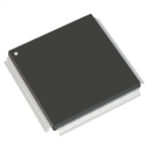 A42MX24-PQ208A

The activity of extra discounts on wholesale prices is in full swing…
Please fill in your contact information and we will send you the latest wholesale price list.



