 ChipApex | Global Electronic Components Supplier

SEARCH
Search Product
Search Post
— IC芯片 | 连接器 | 传感器 | 被动器件 —
Search productSearch post
— IC芯片 | 连接器 | 传感器 | 被动器件 —
Consult the customer manager about the wholesale price.
consultation hotline:86-132-6715-2157
email:[email protected]
Contact the product manager for consultation. One-stop consultation is available.
Do you want a lower wholesale price? Please send us your inquiry and we will reply immediately.
The A42MX24-TQG176I is a field-programmable gate array from the Microchip MX series, featuring 36,000 system gates and 912 logic elements. It provides 150 user-programmable I/O pins within a 176-pin TQFP package. The device supports mixed-voltage operation with core and I/O voltages of 3.3V or 5.0V, adhering to PCI-compliant standards. Operating specifications include a minimum voltage of 4.75V and a maximum of 5.25V for the commercial grade, with an operating temperature range of 0°C to +70°C.
Verify the specific suffix 'I' indicates industrial temperature rating if required, though datasheets often list commercial ranges for standard variants. Confirm RoHS compliance status as some older Actel-branded parts may have non-compliant versions. Check for End-of-Life notifications, as the MX family has faced discontinuation notices from Microchip. Ensure the TQFP-176 package availability aligns with current manufacturing changes documented in Product Change Notifications.
Select this model when 36K system gates and 150 I/Os are necessary for mixed-voltage designs. Compare against the A42MX16 series for lower gate counts or the A42MX24-PL84 variant for different packaging needs. Verify that the 3.3V/5.0V mixed-voltage requirement matches the target application's signal levels. Consider the 176-pin TQFP footprint constraints during PCB layout planning.
This component belongs to the Microchip (formerly Actel) 42MX FPGA family, designed as single-chip ASIC alternatives. The MX series is characterized by its flash-based technology, allowing instant power-up configuration without external memory. The A42MX24 represents the mid-range capacity within this portfolio, balancing gate density with pin count for versatile programmable logic applications.
Publicly confirmed substitute part numbers are not available in the provided documentation. The A42MX24-3TQG176 shares the same package and gate count but differs in speed grade. Designers should verify compatibility with existing bitstreams and physical footprints before considering any speed-grade variations within the same package.


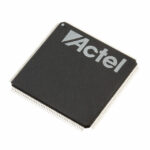 A42MX24-TQG176I

The activity of extra discounts on wholesale prices is in full swing…
Please fill in your contact information and we will send you the latest wholesale price list.




