 ChipApex | Global Electronic Components Supplier

SEARCH
Search Product
Search Post
— IC芯片 | 连接器 | 传感器 | 被动器件 —
Search productSearch post
— IC芯片 | 连接器 | 传感器 | 被动器件 —
Consult the customer manager about the wholesale price.
consultation hotline:86-132-6715-2157
email:[email protected]
Contact the product manager for consultation. One-stop consultation is available.
Do you want a lower wholesale price? Please send us your inquiry and we will reply immediately.
The A42MX36-1BG272I is a Field Programmable Gate Array (FPGA) from the Microchip MX series, manufactured by Actel. It features 54,000 system gates and 1184 Configurable Logic Blocks (CLBs). The device supports dual-voltage operation at 3V to 3.6V and 4.75V to 5.25V. It is housed in a 272-pin Plastic Ball Grid Array (PBGA) package with a 27mm dimension. The component operates within a commercial temperature range of 0°C to 70°C. It includes 2560 bits of embedded RAM and provides 202 I/O pins. The logic structure consists of 2438 cells with a maximum combinational delay of 1.9 ns per CLB.
Verify the specific suffix 'I' confirms the commercial temperature grade (0°C to 70°C) against the official datasheet. Confirm the PBGA-272 package dimensions match the design footprint requirements. Check for End-of-Life (EOL) status or Last-Time-Buy notifications from Microchip Technology, as older MX series components may have limited availability. Ensure RoHS compliance documentation aligns with current regulatory standards.
Select this part when a non-volatile FPGA solution is required to eliminate external configuration EEPROMs. Compare gate density against the A42MX24 if lower resource usage suffices. Consider the BG272 package for higher pin count needs compared to PQFP options. Verify voltage levels match the target system's 3.3V or 5V rails. Evaluate thermal performance within the 0°C to 70°C range for the intended enclosure.
This component belongs to the Actel MX family of flash FPGAs, acquired by Microchip Technology. The MX series is characterized by its non-volatile flash fabric, which allows the device to retain configuration data without power. The A42MX36 represents a mid-range density option within this family, offering a balance between logic capacity and pin count for complex digital designs.
Publicly confirmed substitute part numbers are not available in the provided source material. Consult Microchip Technology directly for validated cross-reference recommendations or newer generation alternatives that maintain functional compatibility.
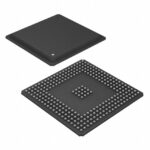 A42MX36-1BG272I

The activity of extra discounts on wholesale prices is in full swing…
Please fill in your contact information and we will send you the latest wholesale price list.





