 ChipApex | Global Electronic Components Supplier
SEARCH
Search Product
Search Post
— IC芯片 | 连接器 | 传感器 | 被动器件 —
Search productSearch post
— IC芯片 | 连接器 | 传感器 | 被动器件 —
Consult the customer manager about the wholesale price.
consultation hotline:86-132-6715-2157
email:[email protected]
Contact the product manager for consultation. One-stop consultation is available.
Do you want a lower wholesale price? Please send us your inquiry and we will reply immediately.
The A4931METTR-T is a three-phase brushless DC (BLDC) motor pre-driver manufactured by Allegro MicroSystems. It operates within a supply voltage range of 8V to 37.5V and supports peak output currents up to 30mA. The device features an integrated 3.3V/5V regulator and functions as a half-bridge driver for external N-channel MOSFETs. It includes protection mechanisms such as stall detection, thermal shutdown, and overvoltage monitoring. The component is housed in a compact 28-pin QFN package with dimensions of 5mm x 5mm and an exposed thermal pad, suitable for surface mount applications across a temperature range of -20°C to +105°C.
Verify the manufacturer part number A4931METTR-T against official Allegro MicroSystems documentation to ensure authenticity. Confirm the specific suffix indicates the tape and reel packaging format. Check for RoHS compliance status and moisture sensitivity level ratings prior to integration into assembly processes.
Select this component when designing compact three-phase BLDC motor drivers requiring integrated commutation logic. It is suitable for applications needing synchronous rectification to improve efficiency. Ensure the external MOSFET selection matches the voltage and current requirements supported by the pre-driver interface.
This part belongs to the A4931 family of motor controllers designed for efficient motion control solutions. It serves as a pre-driver stage, managing gate drive signals for external power stages rather than containing integrated high-current power FETs internally. The design focuses on reducing system complexity by integrating Hall sensing interfaces and protection features.
Evaluate the APEK4931MET-01-T-DK evaluation board for functional verification if testing replacement units. Consult official Allegro MicroSystems documentation for any direct pin-to-pin compatible alternatives within the same product family before substitution.
It employs fixed off-time PWM current control to restrict surge currents during operation.
Commutation is determined by three Hall element inputs spaced 120 degrees apart.
Yes, it uses synchronous rectification to lower power consumption by shorting low RDS MOSFETs with body diodes during current decay.
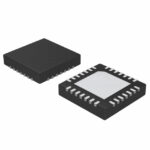 A4931METTR-T
The activity of extra discounts on wholesale prices is in full swing…
Please fill in your contact information and we will send you the latest wholesale price list.





