 ChipApex | Global Electronic Components Supplier
SEARCH
Search Product
Search Post
— IC芯片 | 连接器 | 传感器 | 被动器件 —
Search productSearch post
— IC芯片 | 连接器 | 传感器 | 被动器件 —
Consult the customer manager about the wholesale price.
consultation hotline:86-132-6715-2157
email:[email protected]
Contact the product manager for consultation. One-stop consultation is available.
Do you want a lower wholesale price? Please send us your inquiry and we will reply immediately.
The A4985SESTR-T is a DMOS microstepping stepper motor driver manufactured by Allegro MicroSystems. It operates with a logic supply voltage of 3V to 5.5V and a load voltage range of 8V to 35V. The device supports bipolar stepper motors with step resolutions of full, half, quarter, and eighth steps. It features an integrated translator for simplified control interface requirements. The output stage provides up to 1A of drive current per phase. Protection mechanisms include overcurrent protection, thermal shutdown, and short-circuit protection. The component is housed in a 24-pin QFN package measuring 4x4mm.
Verify the specific suffix SESTR-T corresponds to the tape and reel packaging format required for automated assembly processes. Confirm that the 24-QFN package dimensions align with the printed circuit board land pattern design. Ensure the logic voltage levels are compatible with the host controller's output signals before integration into the final system design.
Select this component when a compact solution for bipolar stepper motors is required with minimal external components. The integrated translator reduces firmware complexity compared to drivers requiring separate sequencers. Consider the 1A current limit and 35V maximum voltage rating to ensure compatibility with the target motor specifications. The QFN package offers a small footprint suitable for space-constrained designs.
This part belongs to the A498x family of microstepping drivers from Allegro MicroSystems. It shares functional similarities with other members like the A4988 but differs in pinout and specific electrical characteristics. The A4985 is designed for applications requiring lower current capacity than the A4988 while maintaining similar control interfaces and protection features within a comparable package size.
The A4987SESTR-T is a related variant within the same family offering different stepping resolutions. Verify pin-to-pin compatibility if substituting directly on existing layouts. Check datasheet differences regarding current ratings and internal circuitry to ensure functional equivalence for the specific application requirements.
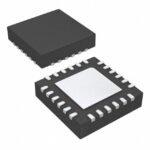 A4985SESTR-T
The activity of extra discounts on wholesale prices is in full swing…
Please fill in your contact information and we will send you the latest wholesale price list.





