 ChipApex | Global Electronic Components Supplier
SEARCH
Search Product
Search Post
— IC芯片 | 连接器 | 传感器 | 被动器件 —
Search productSearch post
— IC芯片 | 连接器 | 传感器 | 被动器件 —
Consult the customer manager about the wholesale price.
consultation hotline:86-132-6715-2157
email:[email protected]
Contact the product manager for consultation. One-stop consultation is available.
Do you want a lower wholesale price? Please send us your inquiry and we will reply immediately.
The A4994KLPTR-T is an automotive-grade dual full-bridge PWM motor driver manufactured by Allegro MicroSystems. It integrates two independent H-bridges designed for driving brushed DC motors or solenoids in parallel configurations. The device operates within a supply voltage range of 4.5 V to 27 V and supports peak output currents up to 1.8 A per bridge. It features a parallel interface for control, enabling precise speed and direction regulation. The component is housed in a thermally enhanced TSSOP-20 package, suitable for surface-mount assembly in space-constrained automotive applications.
Verify the specific suffix 'T' indicates tape-and-reel packaging when ordering. Confirm that the KLP designation aligns with the required automotive grade and temperature specifications for your target application. Cross-reference the datasheet revision date to ensure compatibility with your design requirements. Ensure ESD handling protocols are followed during assembly due to the sensitivity of the CMOS input stages.
Select this component when dual isolated or parallel motor drive capability is required within an automotive environment. It is appropriate for designs needing robust protection features integrated directly into the driver stage. Consider the TSSOP-20 package constraints regarding thermal dissipation and PCB layout. Evaluate if the parallel interface meets the microcontroller's pin count limitations compared to serial alternatives.
This part belongs to Allegro's A499x series of automotive motor drivers, which are engineered for high reliability in vehicle systems. The series typically includes variants with different current ratings and interface types. The A4994 specifically targets applications requiring two separate motor outputs from a single IC, reducing board space and component count compared to discrete solutions.
Check for direct substitutes such as the A4993 or A4995 if current or interface requirements differ. Verify pin-to-pin compatibility before swapping to avoid redesigning the PCB footprint. Ensure that any replacement maintains the same automotive qualification level and operating temperature range.
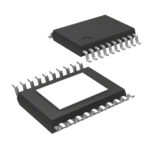 A4994KLPTR-T
The activity of extra discounts on wholesale prices is in full swing…
Please fill in your contact information and we will send you the latest wholesale price list.





