 ChipApex | Global Electronic Components Supplier
SEARCH
Search Product
Search Post
— IC芯片 | 连接器 | 传感器 | 被动器件 —
Search productSearch post
— IC芯片 | 连接器 | 传感器 | 被动器件 —
Consult the customer manager about the wholesale price.
consultation hotline:86-132-6715-2157
email:[email protected]
Contact the product manager for consultation. One-stop consultation is available.
Do you want a lower wholesale price? Please send us your inquiry and we will reply immediately.
The A5364CA-T is a low-current CMOS integrated circuit designed for ionization-type smoke detectors. It provides complete functionality including an internal oscillator, timing circuitry, and alarm logic compliant with UL217 standards. The device supports interconnecting up to 125 units via its I/O pin. Operating from a 6.0 V to 12 V supply, it features a standby current of typically 5.0 μA at 9.0 V. Key electrical parameters include a low-battery threshold of 7.2 V to 7.8 V, hysteresis of 90 mV to 170 mV, and horn output drive capability of ±16 mA. It operates within a temperature range of 0°C to 50°C and is housed in a 16-pin DIP package.
Verify the specific ordering suffix to confirm lead-free status and packaging type. The CA-T designation indicates a lead-free version with matte tin leadframe plating supplied in tubes of 25 pieces. Confirm that the procurement channel sources directly from authorized distributors to ensure component authenticity and compliance with RoHS directives.
Select this component for designs requiring UL217 recognition and low average standby current to maximize battery life. Ensure the application environment remains within the specified 0°C to 50°C operating temperature range. Verify that the external oscillator capacitor selected is a low-leakage type, such as PTFE or polypropylene, to maintain accurate timing cycles.
This part belongs to the Allegro MicroSystems A5364 series of ionization smoke detector ICs. It is functionally similar to the A5366, which is designed for photoelectric smoke detection. Both devices share networking capabilities and low-power architectures but utilize different sensing technologies.
The A5366CA-T serves as a functional replacement for photoelectric applications. Direct substitution requires verifying compatibility with the specific sensor chamber type, as the A5364 is optimized for ionization chambers while the A5366 is intended for photoelectric sensors.
Sensitivity is adjusted by connecting an external resistor between the SENSITIVITY SET pin (Pin 13) and either VDD or VSS. This modifies the voltage divider network to set the smoke trip point relative to the specific ionization chamber characteristics.
These pins provide active guarding for the detector input (DETECT IN). They maintain voltages within 100 mV of the input pin to minimize surface leakage currents and allow voltage measurement without loading the ionization chamber.
Every 24 clock cycles (approximately 40 seconds), the device pulses the LED pin and compares VDD to an internal reference. If the voltage falls below the threshold (typically 7.5 V), it triggers a low-battery alarm pattern on the horn outputs.
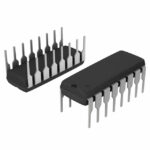 A5364CA-T
The activity of extra discounts on wholesale prices is in full swing…
Please fill in your contact information and we will send you the latest wholesale price list.





