 ChipApex | Global Electronic Components Supplier

SEARCH
Search Product
Search Post
— IC芯片 | 连接器 | 传感器 | 被动器件 —
Search productSearch post
— IC芯片 | 连接器 | 传感器 | 被动器件 —
Consult the customer manager about the wholesale price.
consultation hotline:86-132-6715-2157
email:[email protected]
Contact the product manager for consultation. One-stop consultation is available.
Do you want a lower wholesale price? Please send us your inquiry and we will reply immediately.
The A54SX08-PQ208I is an industrial-grade FPGA from the Actel SX-A family, housed in a 208-pin Plastic Quad Flat Pack (PQFP). It provides 12,000 system gates and supports up to 130 user I/Os. The device operates on 0.22 μm / 0.25 μm CMOS antifuse technology, enabling internal clock frequencies up to 350 MHz and system performance of 250 MHz. It features three global clocks (HCLK, CLKA, CLKB) and supports mixed-voltage I/O standards including 2.5 V, 3.3 V, and 5 V with 5 V input tolerance.
Verify the ordering suffix 'I' confirms the Industrial temperature grade (-40°C to +85°C) and 'PQ208' specifies the Plastic Quad Flat Pack package. Confirm the base part number corresponds to the A54SX08A variant with 12,000 system gates. Ensure compatibility with Actel Designer software for antifuse programming. Check for RoHS compliance if the 'G' suffix is present, though not indicated in this specific model string.
Select this device when 12,000 system gates are sufficient for the design logic requirements. The PQ208 package is suitable for through-hole mounting or standard surface mount processes requiring 208 pins. Consider the -F speed grade if lower performance is acceptable, but note that standard speed is implied by the blank speed grade indicator. Verify that the 130 available user I/Os meet the pin count needs, as larger packages may offer more I/Os for higher density requirements.
This component belongs to the Actel SX-A family of FPGAs, which utilizes antifuse technology for nonvolatile configuration. The SX-A series offers varying capacities from 8,000 to 108,000 system gates. The A54SX08A represents the entry-level capacity within this family, providing a cost-effective solution for moderate complexity designs while maintaining high-speed performance characteristics typical of the antifuse architecture.
Publicly confirmed substitute part numbers are not available in the provided datasheet. Designers should consult Actel or Microchip sales representatives for current availability and potential obsolescence management strategies. Alternative solutions may require re-evaluation of pin compatibility and logic resource utilization.
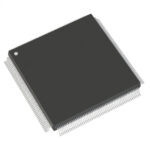 A54SX08-PQ208I

The activity of extra discounts on wholesale prices is in full swing…
Please fill in your contact information and we will send you the latest wholesale price list.






