 ChipApex | Global Electronic Components Supplier
SEARCH
Search Product
Search Post
— IC芯片 | 连接器 | 传感器 | 被动器件 —
Search productSearch post
— IC芯片 | 连接器 | 传感器 | 被动器件 —
Consult the customer manager about the wholesale price.
consultation hotline:86-132-6715-2157
email:[email protected]
Contact the product manager for consultation. One-stop consultation is available.
Do you want a lower wholesale price? Please send us your inquiry and we will reply immediately.
The A54SX08A-2FGG144I is a Field Programmable Gate Array from the Microsemi SX-A family, utilizing antifuse technology. It features 768 Logic Modules (CLBs), 512 Combinatorial Cells, and up to 512 Dedicated Flip-Flops. The device supports 111 User I/Os in a 144-pin Fine Pitch Ball Grid Array package. Electrical specifications include an operating voltage range of 2.25V to 5.25V and an industrial temperature grade of -40°C to +85°C. The speed grade -2 indicates performance approximately 25% faster than the standard speed.
Verify the component authenticity by checking the marking on the package against the datasheet specifications. Confirm the ordering suffix matches the required speed grade (-2) and temperature range (I). Ensure the package type corresponds to the 144-pin FBGA configuration. Request RoHS compliance documentation if applicable to your manufacturing process requirements.
Select this model when a nonvolatile FPGA with moderate logic density is required. The -2 speed grade offers higher performance than the standard version. Verify that the 111 available user I/Os meet the interface requirements. Consider the FBGA package constraints regarding PCB layout and thermal management during the design phase.
This part belongs to the Actel SX-A family of FPGAs, which were originally designed by Actel Corporation before being acquired by Microsemi. The SX-A series is characterized by its antifuse technology, providing high security and deterministic performance compared to volatile SRAM-based FPGAs.
Direct pin-compatible replacements within the same package and speed grade are limited due to the discontinuation of the SX-A line. Cross-referencing with newer Microsemi SmartFusion or IGLOO families requires significant schematic and layout redesigns as they utilize different technologies and pinouts.
The SX-A family devices support internal clock frequencies up to 350 MHz.
FuseLock prevents reverse engineering and unauthorized reading of the design by hiding special security fuses throughout the fabric, making invasive and noninvasive attacks ineffective.
Yes, in Flexible mode, TDI, TCK, and TDO can function as user I/Os, but TMS cannot be used as a user I/O in any mode.

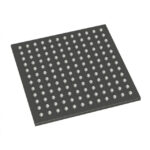 A54SX08A-2FGG144I
The activity of extra discounts on wholesale prices is in full swing…
Please fill in your contact information and we will send you the latest wholesale price list.




