 ChipApex | Global Electronic Components Supplier
SEARCH
Search Product
Search Post
— IC芯片 | 连接器 | 传感器 | 被动器件 —
Search productSearch post
— IC芯片 | 连接器 | 传感器 | 被动器件 —
Consult the customer manager about the wholesale price.
consultation hotline:86-132-6715-2157
email:[email protected]
Contact the product manager for consultation. One-stop consultation is available.
Do you want a lower wholesale price? Please send us your inquiry and we will reply immediately.
The A54SX16-1VQG100 is a Flash FPGA from the SX-A family, featuring 24,000 system gates and 81 user I/Os. It operates at a maximum system frequency of 250 MHz with an internal performance of 350 MHz. The device utilizes 0.22 μm / 0.25 μm CMOS antifuse technology and supports mixed-voltage operation at 2.5 V, 3.3 V, and 5 V. It includes 768 logic modules, 924 combinatorial cells, and up to 512 dedicated flip-flops. The component is housed in a 100-pin Thin Quad Flat Pack (TQFP) package.
Verify the specific speed grade suffix associated with the model number, as standard specifications may vary between speed grades. Confirm the temperature range designation matches the intended operational environment. Check for RoHS compliance status if environmental regulations apply. Ensure the package type corresponds exactly to the required pin count and form factor for PCB layout compatibility.
Select this device when 24,000 system gates and 81 I/Os are sufficient for the design requirements. Consider the 250 MHz system performance limit for timing closure. Evaluate the need for mixed-voltage I/O support if interfacing with 5 V legacy components. Verify that the TQFP-100 package fits within the available board space constraints.
This component belongs to the Actel SX-A family of Flash FPGAs, which are fabricated on a high-voltage twin-well CMOS process. The family offers various gate counts ranging from 12,000 to 108,000 system gates. The SX-A architecture is characterized by its sea-of-modules design and patented antifuse interconnect technology, providing deterministic timing and high performance.
A54SX16A-1VQG100I
The architecture uses DirectConnect for horizontal routing within SuperClusters with less than 0.1 ns delay, and FastConnect for routing between any two logic modules within a SuperCluster with a maximum delay of 0.3 ns.
The device incorporates FuseLock technology, which prevents unauthorized reading of the antifuse contents. Additionally, the antifuse structure makes it difficult to distinguish between programmed and unprogrammed states.
Yes, VCCA and VCCI do not have to be stable during power-up/down and can be powered in any order, supporting hot-swap applications except for 3.3 V PCI.


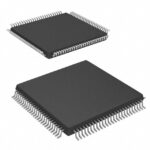 A54SX16-1VQG100
The activity of extra discounts on wholesale prices is in full swing…
Please fill in your contact information and we will send you the latest wholesale price list.




