 ChipApex | Global Electronic Components Supplier
SEARCH
Search Product
Search Post
— IC芯片 | 连接器 | 传感器 | 被动器件 —
Search productSearch post
— IC芯片 | 连接器 | 传感器 | 被动器件 —
Consult the customer manager about the wholesale price.
consultation hotline:86-132-6715-2157
email:[email protected]
Contact the product manager for consultation. One-stop consultation is available.
Do you want a lower wholesale price? Please send us your inquiry and we will reply immediately.
The A54SX16A-FFG144 is a Field Programmable Gate Array from the Actel SX-A family, fabricated on 0.22 μm / 0.25 μm CMOS antifuse technology. It provides 24,000 system gates and 1,452 logic modules (combinatorial cells). The device supports up to 111 user-programmable I/Os and includes dedicated flip-flops for sequential logic. It operates at a maximum system performance of 250 MHz with internal clock frequencies reaching 350 MHz. The component utilizes a 144-pin Fine Pitch Ball Grid Array (FBGA) package with a 1.0 mm pitch.
Verify the specific speed grade suffix associated with the FFG144 package, as standard speed grades are designated by blank or specific alphanumeric codes in the ordering information. Confirm that the required temperature grade aligns with the commercial, industrial, automotive, or military options available for this package type. Ensure the design accounts for the nonvolatile nature of the antifuse technology during the procurement planning phase.
Select this device when designs require high-density logic within a 144-pin footprint and benefit from the SX-A architecture's deterministic timing. Consider the 24,000 system gate capacity relative to the target application complexity. Verify that the 1.0 mm FBGA package fits the PCB layout constraints and that the 2.5 V core voltage requirement is supported by the system power supply design.
This component belongs to the Actel SX-A family of FPGAs, which are characterized by their use of antifuse technology rather than volatile SRAM configuration memories. The family offers various gate densities ranging from 8,000 to 108,000 system gates. The A54SX16A variant specifically targets applications needing moderate logic density with high-speed performance capabilities.
Direct replacements must match the 144-pin FBGA package and 24,000 system gate capacity within the SX-A family. Other speed grades of the A54SX16A may be compatible if timing requirements allow. Cross-family replacements from other manufacturers would require significant schematic and layout redesign due to architectural differences.
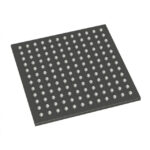 A54SX16A-FFG144
The activity of extra discounts on wholesale prices is in full swing…
Please fill in your contact information and we will send you the latest wholesale price list.






