 ChipApex | Global Electronic Components Supplier
SEARCH
Search Product
Search Post
— IC芯片 | 连接器 | 传感器 | 被动器件 —
Search productSearch post
— IC芯片 | 连接器 | 传感器 | 被动器件 —
Consult the customer manager about the wholesale price.
consultation hotline:86-132-6715-2157
email:[email protected]
Contact the product manager for consultation. One-stop consultation is available.
Do you want a lower wholesale price? Please send us your inquiry and we will reply immediately.
The A54SX16A-FG144I is a Field Programmable Gate Array from the Actel SX-A family, featuring 24,000 system gates and 1,452 logic modules. It utilizes 0.22 μm / 0.25 μm CMOS antifuse technology with a standard speed grade. The device operates within an industrial temperature range of -40°C to +85°C and is housed in a 144-pin Fine Pitch Ball Grid Array (FG) package with a 1.0 mm pitch. It supports up to 113 user-programmable I/O pins and includes three global clock networks.
Verify the specific ordering suffix against the manufacturer's current datasheet to confirm package type, speed grade, and temperature rating. Ensure compatibility with design tools such as Actel Designer for programming and configuration. Check for RoHS compliance status if required by assembly specifications.
Select this component when 24,000 system gates and 1,452 logic modules are sufficient for the design. The FG144 package is suitable for space-constrained PCB layouts requiring fine-pitch connections. Consider the industrial temperature grade if the application environment exceeds commercial limits.
This part belongs to the Actel SX-A family of FPGAs, which are designed for cost-effective, high-performance designs using antifuse technology. The family includes devices ranging from 8,000 to 108,000 system gates, offering various package options and speed grades to suit different performance and pin-count requirements.
Direct replacements may include other parts within the A54SX16A series with different speed grades or packages, such as A54SX16A-TQ144I or A54SX16A-PQ208I, provided pinout and resource requirements match. Verify that any substitute maintains the same antifuse technology characteristics and I/O voltage levels.
The A54SX16A devices support internal clock frequencies up to 350 MHz.
Reverse engineering is prevented by the inherent difficulty in distinguishing programmed from unprogrammed antifuses and by FuseLock™ security fuses that block internal probing and overwriting.
No, unused I/O pins should be configured as tristate outputs by the design software. Leaving them floating can cause unpredictable behavior or excessive current consumption.


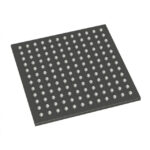 A54SX16A-FG144I
The activity of extra discounts on wholesale prices is in full swing…
Please fill in your contact information and we will send you the latest wholesale price list.



