 ChipApex | Global Electronic Components Supplier
SEARCH
Search Product
Search Post
— IC芯片 | 连接器 | 传感器 | 被动器件 —
Search productSearch post
— IC芯片 | 连接器 | 传感器 | 被动器件 —
Consult the customer manager about the wholesale price.
consultation hotline:86-132-6715-2157
email:[email protected]
Contact the product manager for consultation. One-stop consultation is available.
Do you want a lower wholesale price? Please send us your inquiry and we will reply immediately.
The A54SX16A-FPQG208 is a nonvolatile Field Programmable Gate Array from the Actel SX-A family, fabricated on 0.22 μm / 0.25 μm CMOS antifuse technology. It provides 24,000 system gates and supports up to 175 user-programmable I/O pins within a 208-pin Plastic Quad Flat Pack (PQFP) package. The device operates at a standard speed grade with internal clock frequencies reaching 350 MHz and system performance of 250 MHz. It features mixed-voltage I/O support for 2.5 V, 3.3 V, and 5 V standards, including hot-swap compliance and configurable pull-up/down resistors.
Verify the specific ordering suffix against official Microchip documentation to confirm temperature grade and packaging compliance. The 'G' suffix indicates RoHS compliant packaging. Confirm availability status as legacy antifuse devices may have limited production runs or discontinuation notices. Ensure design files are compatible with the required speed grade and package dimensions.
Select this component when nonvolatile configuration is required to eliminate external boot memory. The SX-A architecture offers high resource utilization with minimal routing overhead compared to SRAM-based FPGAs. Consider the 208-pin PQFP package constraints for PCB layout. Verify that the 24,000 system gate capacity meets the design complexity requirements before finalizing the selection.
This part belongs to the Actel SX-A family of FPGAs, which are characterized by their antifuse-based nonvolatile fabric. The A54SX16A variant specifically targets mid-range logic density applications. The FPQG208 designation identifies the Fine Pitch Ball Grid Array package option with Military temperature grading and RoHS compliance, distinguishing it from standard PQFP or commercial variants.
Direct pin-compatible replacements are not publicly confirmed for this specific antifuse part number due to the proprietary nature of the SX-A architecture. Migration typically requires redesigning the logic fabric and verifying I/O voltage compatibility with newer FPGA families.
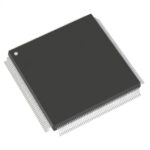 A54SX16A-FPQG208
The activity of extra discounts on wholesale prices is in full swing…
Please fill in your contact information and we will send you the latest wholesale price list.





