 ChipApex | Global Electronic Components Supplier
SEARCH
Search Product
Search Post
— IC芯片 | 连接器 | 传感器 | 被动器件 —
Search productSearch post
— IC芯片 | 连接器 | 传感器 | 被动器件 —
Consult the customer manager about the wholesale price.
consultation hotline:86-132-6715-2157
email:[email protected]
Contact the product manager for consultation. One-stop consultation is available.
Do you want a lower wholesale price? Please send us your inquiry and we will reply immediately.
The A54SX16P-1PQ208 is a nonvolatile Field Programmable Gate Array from the Actel SX-A family, fabricated on 0.22 μm / 0.25 μm CMOS antifuse technology. It provides 24,000 system gates and 1,452 configurable logic blocks (CLBs). The device supports up to 350 MHz internal performance with a maximum user I/O count of 175 in its 208-pin Plastic Quad Flat Pack (PQFP) package. It operates within an industrial temperature range of -40°C to +85°C.
Verify component authenticity by checking markings against official datasheet specifications. Confirm the specific speed grade suffix '1' indicates approximately 15% faster performance than standard speed. Ensure the PQFP-208 package matches your PCB footprint requirements before procurement.
Select this model when 24,000 system gates are required with industrial temperature stability. The '1' suffix denotes a specific speed grade offering higher frequency performance than the standard variant. Verify that the 208-pin PQFP package dimensions fit the available board space constraints.
This component belongs to the Actel SX-A family of FPGAs, which utilizes antifuse technology for nonvolatile configuration. The SX-A series is designed for low-power, high-performance applications, offering a cost-effective alternative to gate arrays while providing robust security features inherent to the antifuse architecture.
Compatible alternatives within the same family include the A54SX16A-PQ208I (standard speed) or the A54SX16A-2PQ208I (higher speed). Ensure the replacement maintains the PQFP-208 package and Industrial temperature grade if environmental conditions require it.
The '-1' suffix indicates a speed grade that is approximately 15% faster than the standard speed version, allowing for higher clock frequencies and reduced logic delays.
Yes, the device supports 2.5 V, 3.3 V, and 5 V mixed-voltage operation with 5 V input tolerance and drive strength, allowing flexible interfacing with various system components.
In Flexible mode, unused TDI, TCK, and TDO pins can function as regular user I/Os. In Dedicated mode, they are reserved for Boundary-Scan Testing and cannot be used as general-purpose I/Os.
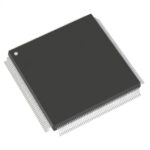 A54SX16P-1PQ208
The activity of extra discounts on wholesale prices is in full swing…
Please fill in your contact information and we will send you the latest wholesale price list.






