ChipApex | Global Electronic Components Supplier
SEARCH
Search Product
Search Post
— IC芯片 | 连接器 | 传感器 | 被动器件 —
Search productSearch post
— IC芯片 | 连接器 | 传感器 | 被动器件 —
Consult the customer manager about the wholesale price.
consultation hotline:86-132-6715-2157
email:[email protected]
Contact the product manager for consultation. One-stop consultation is available.
Do you want a lower wholesale price? Please send us your inquiry and we will reply immediately.
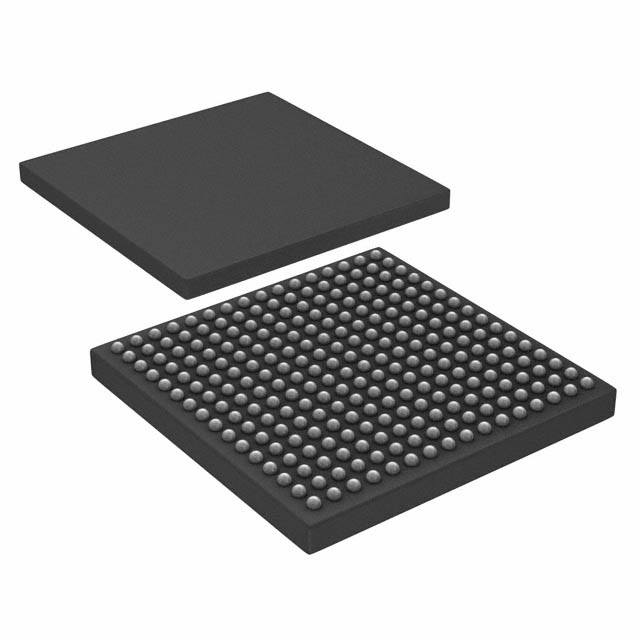
The A54SX72A-1FGG256I is an industrial-grade Field Programmable Gate Array from the SX-A family, manufactured by Microchip Technology. It features 108,000 system gates and 6,036 configurable logic blocks within a 256-pin Fine Pitch Ball Grid Array package. The device supports up to 203 user-programmable I/O pins and operates on a 0.22 μm / 0.25 μm CMOS antifuse process. Supply voltage ranges from 2.25V to 5.25V, with an operating temperature range of -40°C to +85°C. Speed grade -1 provides approximately 15% faster performance than standard, supporting internal clock frequencies up to 350 MHz.
Verify the specific speed grade suffix '-1' corresponds to the required timing constraints for your design, as it differs from the standard speed variant. Confirm the 'I' suffix indicates the industrial temperature range (-40°C to +85°C) rather than commercial or military grades. Ensure the 256-FPBGA package dimensions match your PCB footprint specifications. Check for RoHS compliance status if environmental regulations apply to your manufacturing process.
Select this component when high gate density and nonvolatile configuration are required without external memory. Consider the -1 speed grade if timing margins are tighter than standard devices allow but full -2 performance is unnecessary. Evaluate the 203 available I/O pins against interface requirements, noting that quadrant clocks are unique to this capacity level in the family. Verify voltage compatibility across all I/O banks given the mixed-voltage support capabilities.
This part belongs to the Actel SX-A family of FPGAs, originally developed by Actel Corporation before its acquisition by Microchip Technology. The SX-A series is characterized by its antifuse-based nonvolatile fabric, distinguishing it from volatile SRAM-based FPGAs. The A54SX72A represents the highest capacity device in the initial SX-A lineup, offering the most extensive routing resources and dedicated clock networks among the family members.
Publicly confirmed substitute part numbers are not available in the provided documentation. Designers should consult Microchip Technology for current cross-reference recommendations or migration paths to newer FPGA families, as older antifuse devices may have limited direct pin-compatible alternatives.
 A54SX72A-1FGG256I
The activity of extra discounts on wholesale prices is in full swing…
Please fill in your contact information and we will send you the latest wholesale price list.