ChipApex | Global Electronic Components Supplier
SEARCH
Search Product
Search Post
— IC芯片 | 连接器 | 传感器 | 被动器件 —
Search productSearch post
— IC芯片 | 连接器 | 传感器 | 被动器件 —
Consult the customer manager about the wholesale price.
consultation hotline:86-132-6715-2157
email:[email protected]
Contact the product manager for consultation. One-stop consultation is available.
Do you want a lower wholesale price? Please send us your inquiry and we will reply immediately.
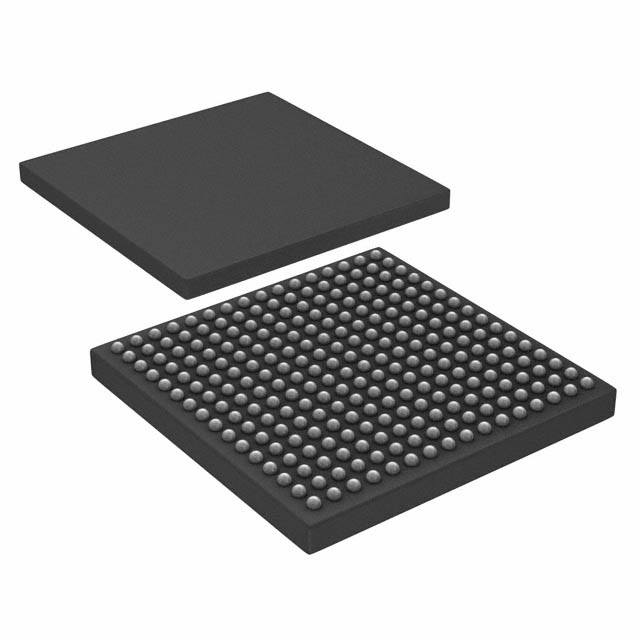
The A54SX72A-FGG256A is an automotive-grade Field Programmable Gate Array (FPGA) from the SX-A family, manufactured by Microchip Technology. It features a sea-of-modules architecture with 108,000 system gates and 6,036 logic modules. The device operates within a supply voltage range of 2.25V to 5.25V and supports an operating temperature range of -40°C to 125°C. It utilizes a 0.22µ CMOS process technology and offers up to 360 user-programmable I/O pins in a 256-pin Fine Pitch Ball Grid Array (FBGA) package.
Verify that the specific suffix 'A' denotes the automotive temperature grade (-40°C to 125°C) as per the manufacturer's ordering information. Confirm RoHS compliance status if required for your assembly process. Ensure the FBGA-256 package dimensions match your PCB footprint design guidelines before finalizing procurement orders.
Select this component when designing for harsh automotive environments requiring wide temperature tolerance. The 108,000 gate capacity suits complex logic implementations previously handled by multiple CPLDs. Consider the nonvolatile nature of the antifuse technology if power-down retention without external configuration memory is necessary for the application.
This part belongs to the Actel SX-A Automotive Family FPGAs, originally developed by Actel Corporation and now managed by Microchip Technology. The SX-A series is characterized by its sea-of-modules architecture, which optimizes silicon utilization through metal-to-metal antifuse interconnects. This family bridges the gap between standard CPLDs and larger FPGA solutions, offering high performance in a compact form factor suitable for space-constrained automotive electronics.
Direct replacements within the same automotive grade include other devices from the SX-A family such as the A54SX32A or A54SX16A, though these offer lower gate counts. For higher capacity needs, consider the RT54SX series. Note that commercial grade equivalents (e.g., A54SX72) lack the guaranteed -40°C to 125°C operating range and are not suitable direct substitutes for automotive applications.
 A54SX72A-FGG256A
The activity of extra discounts on wholesale prices is in full swing…
Please fill in your contact information and we will send you the latest wholesale price list.