 ChipApex | Global Electronic Components Supplier
SEARCH
Search Product
Search Post
— IC芯片 | 连接器 | 传感器 | 被动器件 —
Search productSearch post
— IC芯片 | 连接器 | 传感器 | 被动器件 —
Consult the customer manager about the wholesale price.
consultation hotline:86-132-6715-2157
email:[email protected]
Contact the product manager for consultation. One-stop consultation is available.
Do you want a lower wholesale price? Please send us your inquiry and we will reply immediately.
The A5931GESTR-3-T is a three-phase sensorless fan driver IC from Allegro MicroSystems, designed for high-speed server applications. It incorporates sensorless sinusoidal drive technology to minimize audible noise and vibration. The device features a flexible closed-loop speed control system and integrates full controls with power stages. Key electrical parameters include an operating supply voltage range of 5 V to 16 V, a maximum output current of 3 A, and an operating frequency of 24.4 kHz. It supports interfaces including analog, I²C, and PWM. The component operates within a temperature range of -40°C to +105°C and is housed in a 24-contact QFN package with an exposed thermal pad.
Verify the specific suffix '3' against official datasheets to confirm tape-and-reel quantity specifications, as variations exist between standard and bulk packaging options. Ensure compatibility with the 24-contact QFN footprint and thermal pad requirements during PCB layout. Cross-reference interface signals (I²C, PWM) with system controllers to validate protocol alignment before finalizing procurement orders.
Select this component for applications requiring low-vibration operation in server environments where acoustic noise is critical. The integrated closed-loop control simplifies design by reducing external component count compared to open-loop alternatives. Verify that the 3 A output current rating meets the peak load requirements of the target BLDC fan. Consider the 5 V to 16 V supply range when designing the power delivery network.
This part belongs to the A5931 family of three-phase sensorless fan drivers. It is functionally similar to the A5931GESTR-T but may differ in packaging quantity or specific reel configuration. The series is engineered specifically for minimizing vibration in high-speed server cooling solutions through advanced sinusoidal drive techniques.
Publicly confirmed substitute part numbers are not available in the provided documentation. Evaluate the A5931GESTR-T for functional equivalence, noting potential differences in reel packaging quantities. No other direct cross-model substitutes are explicitly listed in the source material.
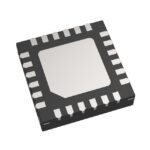 A5931GESTR-3-T
The activity of extra discounts on wholesale prices is in full swing…
Please fill in your contact information and we will send you the latest wholesale price list.





