 ChipApex | Global Electronic Components Supplier
SEARCH
Search Product
Search Post
— IC芯片 | 连接器 | 传感器 | 被动器件 —
Search productSearch post
— IC芯片 | 连接器 | 传感器 | 被动器件 —
Consult the customer manager about the wholesale price.
consultation hotline:86-132-6715-2157
email:[email protected]
Contact the product manager for consultation. One-stop consultation is available.
Do you want a lower wholesale price? Please send us your inquiry and we will reply immediately.
The A6217KEJTR-J is an automotive-grade, constant-current PWM dimmable buck regulator LED driver from Allegro MicroSystems. It features a single output channel capable of delivering up to 3A of drive current. The device operates with an input voltage range of 6V to 48V and supports adjustable output voltage. It utilizes a step-down topology with an internal switch and offers PWM dimming functionality. The component is qualified under AEC-Q100 standards for automotive applications and functions within a junction temperature range of -40°C to 150°C.
Verify the specific suffix 'J' corresponds to the required tape and reel packaging configuration as defined by the manufacturer's latest documentation. Confirm that the 150°C maximum junction temperature rating aligns with your thermal management design constraints. Ensure compatibility with your PCB footprint for the 8-SOIC-EP package before finalizing procurement orders.
Select this component when designing automotive lighting circuits requiring a robust, single-channel buck converter solution. It is suitable for applications needing precise constant-current control and wide input voltage tolerance. Consider the thermal performance of the exposed pad package in high-current scenarios. Verify that the PWM dimming frequency requirements match the system's control interface capabilities.
This part belongs to the A6217 family of LED drivers, which are designed specifically for automotive environments. The family includes variants with different temperature ratings and packaging options. The A6217 series is characterized by its simplicity, high efficiency, and compliance with strict automotive quality standards, making it a standard choice for modern vehicle illumination architectures.
Direct replacements may include other parts from the A6217 family, such as the A6217KLJTR-T, provided the temperature rating and pinout compatibility are verified. Cross-referencing with other Allegro automotive LED drivers like the A6271 requires careful evaluation of topology differences and pin configurations.
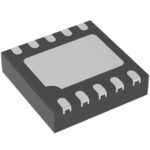 A6217KEJTR-J
The activity of extra discounts on wholesale prices is in full swing…
Please fill in your contact information and we will send you the latest wholesale price list.





