 ChipApex | Global Electronic Components Supplier
SEARCH
Search Product
Search Post
— IC芯片 | 连接器 | 传感器 | 被动器件 —
Search productSearch post
— IC芯片 | 连接器 | 传感器 | 被动器件 —
Consult the customer manager about the wholesale price.
consultation hotline:86-132-6715-2157
email:[email protected]
Contact the product manager for consultation. One-stop consultation is available.
Do you want a lower wholesale price? Please send us your inquiry and we will reply immediately.
The A6262KLPTR-T is a linear, programmable current regulator IC from Allegro MicroSystems designed for automotive LED lighting applications. It provides four independent output channels, each capable of delivering up to 100 mA. The device operates within a supply voltage range of 6 V to 50 V and supports PWM dimming for brightness control. It features internal switches and is housed in a 10-MSOP package with an exposed pad (EP). The component is qualified to AEC-Q100 standards and functions reliably across a temperature range of -40°C to +125°C.
Verify the specific suffix KLPTR-T against the official datasheet to confirm package type and tape-and-reel specifications. Ensure compatibility with the target PCB footprint, specifically the 10-MSOP-EP outline. Confirm that the design accounts for thermal dissipation requirements associated with linear regulation at the intended load currents. Check for any recent product change notices regarding packaging or material composition updates.
Select this component when a multi-channel solution is required for low-to-medium current LED strings. The linear topology simplifies design by removing inductive components but requires careful thermal management. Compare against switching regulators if efficiency is critical, or single-channel drivers if fewer outputs are needed. Ensure the input voltage range aligns with the system's battery or power rail characteristics.
This part belongs to the A6262 family of LED driver ICs from Allegro MicroSystems. The series focuses on providing reliable, linear current regulation for automotive and industrial markets. Similar parts in the lineup may offer different channel counts or current capabilities, such as the A6260 or A6268 variants, catering to diverse lighting architectures.
The A6261KLYTR-T is documented as a parameter-equivalent substitute. Verify pinout compatibility and electrical specifications before substitution. Other members of the A626x family may serve as alternatives depending on channel count and current requirements.
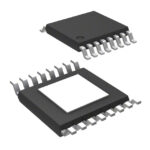 A6262KLPTR-T
The activity of extra discounts on wholesale prices is in full swing…
Please fill in your contact information and we will send you the latest wholesale price list.





