 ChipApex | Global Electronic Components Supplier
SEARCH
Search Product
Search Post
— IC芯片 | 连接器 | 传感器 | 被动器件 —
Search productSearch post
— IC芯片 | 连接器 | 传感器 | 被动器件 —
Consult the customer manager about the wholesale price.
consultation hotline:86-132-6715-2157
email:[email protected]
Contact the product manager for consultation. One-stop consultation is available.
Do you want a lower wholesale price? Please send us your inquiry and we will reply immediately.
The A6276ELPTR is a 16-bit serial-input, constant-current latched LED driver IC manufactured by Allegro MicroSystems. It integrates a CMOS shift register, data latches, and sixteen NPN constant-current sink drivers within a single BiCMOS device. The unit operates with a supply voltage range of 4.5 V to 5.5 V and supports output currents up to 75.5 mA per channel. Designed for LED display applications, it features high-speed serial data input rates up to 20 MHz at 5 V logic levels. The package type is 24-TSSOP-EP.
Verify the specific suffix ELPTR against official datasheets to confirm the 24-TSSOP-EP package configuration. Confirm RoHS3 compliance status through current manufacturer documentation. Ensure compatibility with 5 V logic supplies and check for any recent product change notices regarding packaging or electrical specifications before finalizing procurement orders.
Select this component when a fixed 16-channel constant-current solution is required for LED displays. It is suitable for designs needing high-speed serial data inputs up to 20 MHz. Consider the thermal dissipation limits of the TSSOP package and ensure the external resistor selection aligns with the desired 75.5 mA output current specification.
This part belongs to the A6276 series of LED drivers from Allegro MicroSystems. The series includes variants such as the A6275EA and A6275ELW, which offer similar functionality in 8-bit configurations. These devices are designed to serve as functional replacements for legacy components like the TB62706BN/BF while providing integrated latch and shift register capabilities.
The A6276 serves as a functional replacement for the TB62706BN/BF. Verify that substitute parts maintain identical 16-bit serial input architecture and compatible output current characteristics for seamless integration into existing LED display designs.
The LED drive current is determined by the user's selection of a single external resistor connected to the device.
Yes, cascade connections are permitted using the CMOS serial data output pin to extend drive lines.
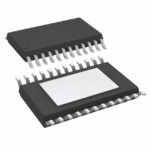 A6276ELPTR
The activity of extra discounts on wholesale prices is in full swing…
Please fill in your contact information and we will send you the latest wholesale price list.





