 ChipApex | Global Electronic Components Supplier
SEARCH
Search Product
Search Post
— IC芯片 | 连接器 | 传感器 | 被动器件 —
Search productSearch post
— IC芯片 | 连接器 | 传感器 | 被动器件 —
Consult the customer manager about the wholesale price.
consultation hotline:86-132-6715-2157
email:[email protected]
Contact the product manager for consultation. One-stop consultation is available.
Do you want a lower wholesale price? Please send us your inquiry and we will reply immediately.
The A6810SLWTR is a bipolar latch driver manufactured by Allegro MicroSystems, designed for high-side power switching applications. It features a 1:10 input-to-output ratio and provides ten independent outputs within a 20-SOIC package. The device operates with a supply voltage range of 3V to 5.5V and supports load voltages up to 60V. Each output channel delivers a maximum current of 40mA. The component utilizes non-inverting inputs and supports both parallel and serial interface configurations. It functions reliably across an ambient temperature range of -20°C to +85°C.
Verify the specific suffix variant when sourcing, as packaging tape changes may affect moisture sensitivity levels. Confirm RoHS compliance status against regulatory requirements, as some variants are marked non-compliant while others meet ROHS3 standards. Check current lifecycle status carefully, as this component is listed as obsolete in multiple distributor records. Ensure the selected package matches the intended PCB footprint specifications.
Select this component for designs requiring isolated high-side control of multiple bipolar loads from a single logic source. The 40mA per channel output current suits moderate load applications without external amplification. Consider the 20-SOIC thermal characteristics for heat dissipation needs. Verify that the 3V to 5.5V supply range aligns with the system's logic voltage levels. Evaluate the serial or parallel interface preference based on available microcontroller resources.
This part belongs to the A6810 series of power drivers from Allegro MicroSystems. It shares core architectural similarities with other devices in the lineup but differs in pin count and output configuration. The 20-SOIC package distinguishes it from DIP or PLCC variants found in related product families. It serves as a specialized solution for applications needing compact, multi-channel high-side switching capabilities.
Publicly confirmed substitute part numbers are not available in the provided documentation. The component is listed as obsolete across major distributors. Designers should consult manufacturer engineering change notices for potential end-of-life alternatives.
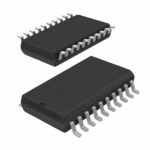 A6810SLWTR
The activity of extra discounts on wholesale prices is in full swing…
Please fill in your contact information and we will send you the latest wholesale price list.





