 ChipApex | Global Electronic Components Supplier
SEARCH
Search Product
Search Post
— IC芯片 | 连接器 | 传感器 | 被动器件 —
Search productSearch post
— IC芯片 | 连接器 | 传感器 | 被动器件 —
Consult the customer manager about the wholesale price.
consultation hotline:86-132-6715-2157
email:[email protected]
Contact the product manager for consultation. One-stop consultation is available.
Do you want a lower wholesale price? Please send us your inquiry and we will reply immediately.
The A6821SLWTR-T is an eight-channel source driver manufactured by Allegro MicroSystems, designed for high-side power switching applications. It operates within a supply voltage range of 3V to 5.5V and supports load voltages up to 50V maximum. The device delivers a maximum output current of 500mA per channel with a 1:8 input-to-output ratio. It features non-inverting inputs and utilizes parallel or serial interfaces for control. Packaged in a 16-SOIC surface-mount format, it functions as a latch driver suitable for environments ranging from -20°C to +85°C.
Verify the specific suffix and package variant against the manufacturer's latest datasheet before ordering. Confirm that the 16-SOIC footprint matches the target PCB layout. Check RoHS compliance status as specifications may vary by production batch. Ensure the operating temperature range meets the environmental requirements of the final assembly. Validate interface compatibility with the host controller.
Select this component when eight isolated high-side switches are required within a single package. It is appropriate for designs needing 500mA drive capability per channel. Consider the 16-SOIC package constraints for thermal management. Evaluate the need for latch functionality versus momentary switching. Compare interface options to determine if serial or parallel control best fits the system architecture.
This part belongs to Allegro MicroSystems' series of power drivers focused on automotive and industrial applications. It complements other high-side switch solutions by offering multi-channel integration. The product line emphasizes reliability in harsh electrical environments. It serves as a compact alternative to discrete transistor arrays for load management tasks.
Direct substitutes include the A2982SLWTR-T which offers similar bipolar drive characteristics. Verify pinout compatibility and current ratings when cross-referencing with other Allegro high-side drivers. Ensure the replacement package matches the existing board design constraints.
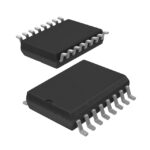 A6821SLWTR-T
The activity of extra discounts on wholesale prices is in full swing…
Please fill in your contact information and we will send you the latest wholesale price list.





