 ChipApex | Global Electronic Components Supplier
SEARCH
Search Product
Search Post
— IC芯片 | 连接器 | 传感器 | 被动器件 —
Search productSearch post
— IC芯片 | 连接器 | 传感器 | 被动器件 —
Consult the customer manager about the wholesale price.
consultation hotline:86-132-6715-2157
email:[email protected]
Contact the product manager for consultation. One-stop consultation is available.
Do you want a lower wholesale price? Please send us your inquiry and we will reply immediately.
The A7987TR is a 61 V, 3 A asynchronous step-down switching regulator manufactured by STMicroelectronics. It operates with an input voltage range of 4.5 V to 61 V and provides an adjustable output voltage from 0.8 V to the input voltage. The device features an adjustable switching frequency between 250 kHz and 1.5 MHz, enabling compact design through high-frequency operation. It includes integrated pulse-by-pulse current sensing with digital frequency fold-back for short-circuit protection and supports synchronization via the SYNCH pin. Qualified under AEC-Q100 standards, it is housed in a 16-HTSSOP package.
Verify the specific ordering suffix (e.g., TR for reel) against the manufacturer's official datasheet to ensure correct packaging configuration. Confirm that the AEC-Q100 qualification status meets your project's reliability requirements. Check the latest datasheet revision for any updates on thermal characteristics or recommended external component values before finalizing the bill of materials.
Select this component when designing for automotive environments requiring high input voltage tolerance up to 61 V. It is suitable for applications needing adjustable output voltages starting from 0.8 V and flexible switching frequencies to optimize inductor size. Consider the asynchronous nature for cost-sensitive designs where synchronous rectification is not mandatory, and utilize the synchronization feature if multiple converters are used in close proximity to reduce electromagnetic interference.
The A7987 belongs to STMicroelectronics' family of wide-voltage automotive switching regulators. It is designed to meet the stringent fail-safe specifications required in automotive systems. The device complements other PMIC solutions by offering robust performance in harsh electrical environments, specifically targeting applications where high input voltage rejection and reliable current delivery are critical.
The L7987 is a related synchronous variant within the same product family. Verify compatibility regarding switching frequency ranges and control pin configurations if substituting between asynchronous and synchronous versions. Ensure that the thermal performance and inductor selection align with the specific converter type selected.
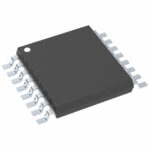 A7987TR
The activity of extra discounts on wholesale prices is in full swing…
Please fill in your contact information and we will send you the latest wholesale price list.





