 ChipApex | Global Electronic Components Supplier
SEARCH
Search Product
Search Post
— IC芯片 | 连接器 | 传感器 | 被动器件 —
Search productSearch post
— IC芯片 | 连接器 | 传感器 | 被动器件 —
Consult the customer manager about the wholesale price.
consultation hotline:86-132-6715-2157
email:[email protected]
Contact the product manager for consultation. One-stop consultation is available.
Do you want a lower wholesale price? Please send us your inquiry and we will reply immediately.
The Abracon AB-557-03-HCLP-F-L-C-T is a crystal-less PCI Express dual-output ultra-miniature Pure Silicon SMD clock generator. It operates within a frequency range of 2.3 MHz to 460 MHz, with a nominal frequency of 100 MHz. The device features HCSL and LVPECL output formats, powered by a supply voltage between 2.25 V and 3.6 V. It supports an operating temperature range of -40°C to +85°C and utilizes a 14-VFQFN exposed pad package (3.2x2.5 mm). Key electrical parameters include a maximum supply current of 60 mA in enabled mode, overall frequency stability of ±100 ppm, and aging of ±5.0 ppm for the first year.
Verify that the specific suffixes match the required output formats and temperature range. The 'HC' suffix indicates HCSL output for Clock 0, while 'LP' indicates LVPECL for Clock 1. The 'L' suffix confirms the -40°C to +85°C operating temperature range. Confirm packaging requirements, as 'T' denotes tape and reel with 1,000 pieces per reel. Ensure the design accommodates the specified supply voltage and power consumption levels.
Select this component when a compact, crystal-less timing solution is required for PCIe or Ethernet interfaces. The dual-output capability allows for simultaneous generation of different logic families, simplifying board layout. Consider the ±100 ppm overall frequency stability and ±5 ppm annual aging for long-term system accuracy. Verify that the 100 MHz nominal frequency meets the target application's clocking needs, as other frequencies require direct consultation with the manufacturer.
This part belongs to the AB-557-03 series of Pure Silicon clock generators manufactured by Abracon LLC. The series is designed to replace traditional quartz crystals and oscillators with solid-state alternatives. The model number encodes specific options: 'HCLP' defines the output types, 'F' specifies the 14-QFN package, 'L' sets the extended temperature range, and 'C' indicates standard frequency stability.
For frequencies other than 100 MHz, the ASEMDxx series is recommended. Direct pin-to-pin replacements are not explicitly listed; however, designers should verify compatibility regarding output swing, rise/fall times, and supply voltage ranges when substituting with other clock generators.
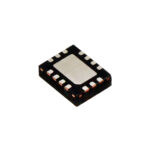 AB-557-03-HCLP-F-L-C-T
The activity of extra discounts on wholesale prices is in full swing…
Please fill in your contact information and we will send you the latest wholesale price list.





