 ChipApex | Global Electronic Components Supplier
SEARCH
Search Product
Search Post
— IC芯片 | 连接器 | 传感器 | 被动器件 —
Search productSearch post
— IC芯片 | 连接器 | 传感器 | 被动器件 —
Consult the customer manager about the wholesale price.
consultation hotline:86-132-6715-2157
email:[email protected]
Contact the product manager for consultation. One-stop consultation is available.
Do you want a lower wholesale price? Please send us your inquiry and we will reply immediately.
The Abracon AB1811-T3 is a Real-Time Clock (RTC) IC featuring an SPI serial interface and a 16-VFQFN Exposed Pad package. It operates within a supply voltage range of 1.7V to 3.6V, with battery backup support from 1.5V to 3.6V. The device provides timekeeping in HH:MM:SS:hh format and supports YY-MM-DD-dd date formats. Key features include alarm capabilities, leap year calculation, and a trickle charger. Timekeeping current consumption ranges from 0.17µA to 0.22µA at 1.8V to 3V. It functions reliably across an operating temperature range of -40°C to 85°C.
Verify the specific suffix '-T3' against manufacturer documentation to confirm packaging details such as Tape & Reel or Cut Tape specifications. Ensure the selected variant matches the required SPI interface configuration, as I2C variants exist within the same family. Confirm RoHS compliance status through official datasheets before procurement.
Select the AB1811-T3 when SPI connectivity is required instead of I2C. This model lacks general-purpose RAM found in higher-tier AB181x parts. Evaluate power requirements; if ultra-low standby current is critical, utilize the RC oscillator mode. Ensure the host system can accommodate the 16-pin QFN-16 package dimensions of 3x3 mm.
The AB1811 belongs to the AB18XX Real-Time Clock with Power Management family. It is software and pin compatible with other members like the AB1801 and AB1813, though feature sets vary. The series utilizes Subthreshold Power Optimized Technology (SPOT) CMOS platform for minimal power consumption.
AB1801-T3 offers identical functionality but uses an I2C interface instead of SPI. AB1813-T3 provides additional 64 bytes of general-purpose RAM while maintaining the SPI interface. Verify pin compatibility and register mapping differences when substituting these components.
The AB1811 supports SPI bus speeds up to 2 MHz.
No, the AB1811 does not include general-purpose RAM. Models like the AB1813 and AB1815 provide 64B and 256B of RAM, respectively.
The AB1811 automatically switches to VBAT power when VCC falls below a threshold, ensuring continuous timekeeping and data retention.
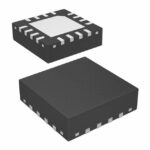 AB1811-T3
The activity of extra discounts on wholesale prices is in full swing…
Please fill in your contact information and we will send you the latest wholesale price list.





