 ChipApex | Global Electronic Components Supplier
SEARCH
Search Product
Search Post
— IC芯片 | 连接器 | 传感器 | 被动器件 —
Search productSearch post
— IC芯片 | 连接器 | 传感器 | 被动器件 —
Consult the customer manager about the wholesale price.
consultation hotline:86-132-6715-2157
email:[email protected]
Contact the product manager for consultation. One-stop consultation is available.
Do you want a lower wholesale price? Please send us your inquiry and we will reply immediately.
The ACA2408S7P2 is a surface mount monolithic GaAs RF linear amplifier designed for CATV applications. It operates within the 40 MHz to 870 MHz frequency range and provides a gain of 34 dB. The device utilizes a push-pull line amplifier architecture housed in a 16-SOIC package. This component serves as a replacement for standard hybrid amplifiers in new designs, offering consistent performance through its monolithic construction.
Verify the manufacturer designation, specifically checking for Anadigics or Skyworks Solutions Inc., as both entities have produced this component. Confirm the specific suffix S7P2 matches the required 16-SOIC package variant. Ensure the datasheet confirms the 34 dB gain specification at 870 MHz. Cross-reference the RoHS compliance status if environmental regulations apply to your deployment. Validate that the pinout corresponds to the SOIC-16 configuration before procurement.
Select this component when a compact, high-gain solution is required for CATV systems operating up to 870 MHz. The push-pull topology offers advantages over single-ended designs in terms of distortion reduction. Consider the surface mount form factor for automated manufacturing efficiency. Evaluate the need for a 34 dB gain level against system loss calculations. Ensure the 16-SOIC footprint fits the available PCB space compared to larger hybrid alternatives.
This part belongs to the ACA series of RF amplifiers developed by Anadigics. These components were engineered to replace bulkier traditional hybrid amplifiers with smaller, more reliable monolithic solutions. The series includes various models tailored for different frequency ranges and gain requirements within the cable television infrastructure market.
The ACA2408S7P2 is explicitly designed to replace standard CATV hybrid amplifiers in new designs. Verify compatibility with existing transmission line baluns if cascading is required. Check for equivalent parts such as the ACA2420RS7P2 for higher frequency applications, though gain and frequency ranges differ significantly.
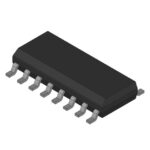 ACA2408S7P2
The activity of extra discounts on wholesale prices is in full swing…
Please fill in your contact information and we will send you the latest wholesale price list.







