ChipApex | Global Electronic Components Supplier
SEARCH
Search Product
Search Post
— IC芯片 | 连接器 | 传感器 | 被动器件 —
Search productSearch post
— IC芯片 | 连接器 | 传感器 | 被动器件 —
Consult the customer manager about the wholesale price.
consultation hotline:86-132-6715-2157
email:[email protected]
Contact the product manager for consultation. One-stop consultation is available.
Do you want a lower wholesale price? Please send us your inquiry and we will reply immediately.
The Abracon ACMP-4528-800-T is a surface-mount common mode choke designed for high-current applications. It features an impedance of 80 ohms at 100 MHz and supports a maximum DC current rating of 3 amperes. The component exhibits a maximum DC resistance of 50 milliohms, ensuring low power loss during operation. It operates reliably within a temperature range of -40°C to +125°C. The device utilizes ferrite core material and is shielded to minimize electromagnetic interference. Its compact SMD package facilitates automated PCB assembly processes.
Verify the complete part number including suffixes such as '-T' for tape and reel packaging when ordering. Confirm that the specified 80 ohm impedance and 3A current ratings align with your circuit requirements. Ensure compatibility with surface mount reflow soldering profiles. Check for RoHS compliance documentation if required by your manufacturing standards. Validate supplier authenticity through authorized Abracon distribution channels.
Select this component when shielding and high current handling are prioritized over minimal footprint. The 80 ohm impedance offers balanced attenuation for moderate frequency noise. Consider thermal management due to the 3A rating and associated power dissipation. Compare against lower impedance variants if higher frequency suppression is needed. Evaluate board space constraints against the physical dimensions of the ACMP-4528 series.
This component belongs to the Abracon ACMP-4528 series of common mode chokes. The series is characterized by shielded construction and robust current handling capabilities. It targets applications requiring reliable EMI suppression in compact form factors. The ACMP-4528-800-T specifically denotes the 80 ohm impedance variant within this product line.
Direct substitutes include other Abracon ACMP-4528 series parts with matching impedance and current ratings. Cross-reference with equivalent shielded common mode chokes from other manufacturers ensuring identical pinout and electrical specifications. Verify that alternative components meet the same temperature and current requirements.
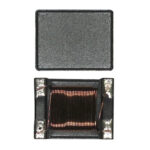 ACMP-4528-800-T
The activity of extra discounts on wholesale prices is in full swing…
Please fill in your contact information and we will send you the latest wholesale price list.