 ChipApex | Global Electronic Components Supplier
SEARCH
Search Product
Search Post
— IC芯片 | 连接器 | 传感器 | 被动器件 —
Search productSearch post
— IC芯片 | 连接器 | 传感器 | 被动器件 —
Consult the customer manager about the wholesale price.
consultation hotline:86-132-6715-2157
email:[email protected]
Contact the product manager for consultation. One-stop consultation is available.
Do you want a lower wholesale price? Please send us your inquiry and we will reply immediately.
The ACPL-K33T-560E is a single-channel automotive-grade logic output optocoupler from the Broadcom K33T series. It features an R²Coupler architecture with a peak output current of 2.5A and a forward voltage of 1.5V. The device provides a propagation delay of 15ns for rise and fall times, ensuring fast signal transmission. It offers high isolation capability rated at 5kVrms and operates within a temperature range of -40°C to 125°C. Packaged in an 8-pin SO stretched surface-mount format, it meets AEC-Q100 qualification standards for automotive reliability.
Verify component authenticity through authorized distributors or direct manufacturer channels. Confirm that the specific suffix matches the required packaging and lead time specifications. Ensure compliance with RoHS directives and phthalate regulations as stated in official documentation. Cross-reference the datasheet revision date to guarantee alignment with current design requirements and quality standards.
Select this component when high-speed isolation is critical for automotive or industrial applications. The 2.5A peak output current supports direct gate driving capabilities. Consider the 125°C operating temperature range for harsh environments. Verify that the 8-pin SO stretched package fits the PCB layout constraints. Ensure the 5kVrms isolation voltage meets system safety requirements.
This part belongs to the K33T series of logic output optocouplers designed for demanding applications. It represents Broadcom's focus on providing reliable isolation solutions for automotive and industrial sectors. The series emphasizes speed and robustness, addressing the needs of modern electronic systems requiring precise signal transfer across isolated boundaries.
Check for cross-referenced parts with similar pinout and isolation ratings. Verify if alternative models offer compatible peak output currents and propagation delays. Ensure any substitute maintains AEC-Q100 qualification if automotive use is intended. Confirm package dimensions match the existing footprint to avoid rework.
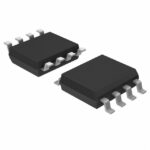 ACPL-K33T-560E
The activity of extra discounts on wholesale prices is in full swing…
Please fill in your contact information and we will send you the latest wholesale price list.





