 ChipApex | Global Electronic Components Supplier
SEARCH
Search Product
Search Post
— IC芯片 | 连接器 | 传感器 | 被动器件 —
Search productSearch post
— IC芯片 | 连接器 | 传感器 | 被动器件 —
Consult the customer manager about the wholesale price.
consultation hotline:86-132-6715-2157
email:[email protected]
Contact the product manager for consultation. One-stop consultation is available.
Do you want a lower wholesale price? Please send us your inquiry and we will reply immediately.
The ACPL-M61M-500E is a single-channel high-speed logic output optoisolator manufactured by Broadcom Limited. It features a push-pull CMOS output stage and operates with a data rate of 10 MBd. The device provides an isolation voltage of 3750 Vrms and exhibits a common-mode transient immunity (CMTI) of 20 kV/µs. Electrical characteristics include a typical propagation delay of 90 ns, rise time of 6 ns, and fall time of 7 ns. It functions within a supply voltage range of 2.5 V to 3.3 V and supports a maximum DC forward current of 8 mA. The component is housed in a 5-SO package and is rated for operation between -40°C and 125°C.
Verify the specific suffix code against official documentation to confirm exact performance grades and compliance status. Ensure that the procurement channel provides authentic components from authorized sources to guarantee reliability. Cross-reference the ordering part number with the manufacturer's latest datasheet to validate package type and temperature range specifications before finalizing orders.
Select this component when high-speed data transfer is required alongside significant electrical isolation. The push-pull output architecture is suitable for driving low-impedance loads directly. Consider the operating temperature range and supply voltage compatibility with the target system logic levels. Evaluate the CMTI rating against the expected noise environment to ensure signal integrity during transient events.
This device belongs to the ACPL-M61 series of high-speed optocouplers designed for demanding industrial applications. The series emphasizes fast response times and high noise immunity. The ACPL-M61M-500E variant specifically utilizes a 5-pin SOIC package, offering a compact footprint for surface-mount assembly while maintaining robust isolation barriers for safety-critical systems.
Consult official substitution guides for compatible alternatives within the same product family or equivalent performance tiers. Verify pinout compatibility and electrical parameter alignment before implementing any substitute components in existing designs.
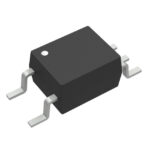 ACPL-M61M-500E
The activity of extra discounts on wholesale prices is in full swing…
Please fill in your contact information and we will send you the latest wholesale price list.






