 ChipApex | Global Electronic Components Supplier
SEARCH
Search Product
Search Post
— IC芯片 | 连接器 | 传感器 | 被动器件 —
Search productSearch post
— IC芯片 | 连接器 | 传感器 | 被动器件 —
Consult the customer manager about the wholesale price.
consultation hotline:86-132-6715-2157
email:[email protected]
Contact the product manager for consultation. One-stop consultation is available.
Do you want a lower wholesale price? Please send us your inquiry and we will reply immediately.
The ACST4-7CH is a single-phase AC power switch from STMicroelectronics, utilizing ASD™ technology to integrate a Triac structure with an internal high-voltage clamping device. This component is designed for home appliances and industrial systems, driving loads up to 4 A RMS. It features a repetitive peak off-state voltage of 700 V and withstands line transients per IEC 61000-4-5 standards. The 'C' suffix indicates a gate triggering current (IGT) maximum of 25 mA, while the 'H' suffix denotes a specific package variant within the DPAK family.
Verify the exact physical dimensions and pinout configuration for the 'H' package designation, as standard datasheets primarily detail the 'B' (DPAK) and 'FP' (TO-220FPAB) variants. Confirm that the 'C' suffix corresponds to the specified 25 mA maximum gate trigger current requirements for your controller interface.
Select this component for applications requiring direct microcontroller interfacing and simplified bill of materials due to integrated transient suppression. Ensure the thermal design accommodates the junction-to-case resistance for the specific load current and ambient temperature conditions expected in the final assembly.
This device belongs to the ACST series of AC power switches built on Application Specific Discrete (ASD) technology. It serves as a compact alternative to discrete Triacs combined with varistors or RC snubbers, offering a unified solution for switching low-power resistive and inductive loads in mains-powered equipment.
Publicly confirmed substitute part numbers are not available in the provided documentation. Verify compatibility with existing PCB footprints if considering alternatives from other manufacturers.
No, thanks to its thermal and turn-off commutation performances, it can drive inductive loads up to 4 A without additional snubber circuits.
It sustains voltage spikes up to 2 kV above the peak line voltage by clamping low-energy spikes or breaking over under high-energy shocks, complying with IEC 61000-4-5 standards.
The COM pin serves as the common drive reference and should be connected to the power line neutral.
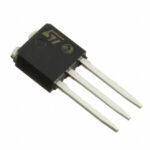 ACST4-7CH
The activity of extra discounts on wholesale prices is in full swing…
Please fill in your contact information and we will send you the latest wholesale price list.





