 ChipApex | Global Electronic Components Supplier

SEARCH
Search Product
Search Post
— IC芯片 | 连接器 | 传感器 | 被动器件 —
Search productSearch post
— IC芯片 | 连接器 | 传感器 | 被动器件 —
Consult the customer manager about the wholesale price.
consultation hotline:86-132-6715-2157
email:[email protected]
Contact the product manager for consultation. One-stop consultation is available.
Do you want a lower wholesale price? Please send us your inquiry and we will reply immediately.
The ACT4751MQI101-T is a specialized PMIC and synchronous buck converter designed for automotive USB Type-C fast charging applications. It supports Power Delivery 3.0 Programmable Power Supply (PPS) specifications. The device operates with an input voltage range of 4.5 V to 40 V and delivers up to 4 A output current. Output voltage is adjustable from 3 V to 24 V. It features low quiescent current of 6 uA during operation and standby current of 235 uA. The component is qualified under AEC-Q100 standards, ensuring reliability in automotive environments. It functions within a temperature range of -40°C to +125°C and utilizes a QFN-32 surface-mount package.
Verify the specific suffix 'M' indicates automotive grade qualification distinct from standard variants. Confirm the 'QI101' suffix aligns with required AEC-Q100 reliability standards for your target application. Ensure the QFN-32 package dimensions match your PCB footprint requirements. Check for the latest datasheet revisions to confirm pinout compatibility with existing designs.
Select this component when designing automotive USB-C chargers requiring PPS support. It is suitable for systems needing wide input voltage tolerance typical of car batteries. Consider the 4 A current limit for high-power device charging needs. The integrated nature reduces external component count compared to discrete solutions. Evaluate thermal performance within the QFN-32 package for your enclosure constraints.
This part belongs to the ACT4751 series of specialized power management ICs from Qorvo. It is derived from Active-Semi technology acquired by Qorvo. The series focuses on programmable analog power solutions for consumer and automotive markets. It complements other Qorvo PMICs like the ACT4752 and ACT88321 in broader power architecture designs.
The ACT4752QI101-T is a related variant within the same family. Verify if functional differences between the M and non-M suffixes impact your specific automotive safety requirements. Cross-reference pinouts and control interfaces before substitution.
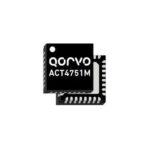 ACT4751MQI101-T

The activity of extra discounts on wholesale prices is in full swing…
Please fill in your contact information and we will send you the latest wholesale price list.






