 ChipApex | Global Electronic Components Supplier
SEARCH
Search Product
Search Post
— IC芯片 | 连接器 | 传感器 | 被动器件 —
Search productSearch post
— IC芯片 | 连接器 | 传感器 | 被动器件 —
Consult the customer manager about the wholesale price.
consultation hotline:86-132-6715-2157
email:[email protected]
Contact the product manager for consultation. One-stop consultation is available.
Do you want a lower wholesale price? Please send us your inquiry and we will reply immediately.
The ACT4911QW301-T is a specialized power management IC designed for power loss protection applications. It integrates a boost converter for high-voltage energy storage and a synchronous buck regulator to supply backup power during input failures. The device features an internal back-to-back eFUSE FET providing bidirectional isolation between the input source and the system load. It includes an I2C interface for configuration and monitoring, along with an internal ADC for health checks on the storage capacitor and system parameters.
Verify the specific suffix '301' against official Qorvo documentation to confirm output voltage settings and package variations. Ensure compatibility with existing I2C addressing and external component selections. Confirm availability through authorized distributors as lead times may vary. Check for any recent product change notifications affecting pinout or electrical characteristics before finalizing procurement.
Select this component when designing systems that require robust power loss protection with integrated energy storage management. It is suitable for applications needing bidirectional isolation and precise monitoring of storage capacitor health. Consider the external capacitor requirements and I2C bus constraints. Evaluate the thermal performance and operating temperature range relative to the specific application environment.
This part belongs to Qorvo's specialized power management portfolio, focusing on power loss protection solutions. It complements other PMICs by handling critical backup power scenarios where data integrity and system continuity are paramount. The integration of boost and buck converters simplifies the design compared to discrete solutions.
Check for direct substitutes within the ACT491x series with different suffixes for varying output voltages. Verify functional equivalence with other power loss protection ICs from Qorvo or competitors, ensuring pin compatibility and similar electrical specifications. Review datasheets for any differences in I2C commands or monitoring features.
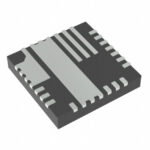 ACT4911QW301-T
The activity of extra discounts on wholesale prices is in full swing…
Please fill in your contact information and we will send you the latest wholesale price list.





