 ChipApex | Global Electronic Components Supplier
SEARCH
Search Product
Search Post
— IC芯片 | 连接器 | 传感器 | 被动器件 —
Search productSearch post
— IC芯片 | 连接器 | 传感器 | 被动器件 —
Consult the customer manager about the wholesale price.
consultation hotline:86-132-6715-2157
email:[email protected]
Contact the product manager for consultation. One-stop consultation is available.
Do you want a lower wholesale price? Please send us your inquiry and we will reply immediately.
The ACT8865QI305-T is a specialized power management IC (PMIC) from Qorvo, designed for advanced system power control. It integrates three buck converters and four low-dropout (LDO) regulators within a single package. The device operates with an input voltage range of 2.7 V to 5.5 V and supports output voltages from 1.35 V to 3.3 V. Key output currents include 320 mA, 1.15 A, and 1.3 A across its channels. It utilizes I2C and USB interfaces for configuration and monitoring. The component is housed in a QFN-32 package and functions within a temperature range of -40°C to +85°C.
Verify the specific suffix 'T' indicates tape-and-reel packaging when ordering. Confirm that the QFN-32 package dimensions match your PCB footprint requirements. Ensure compatibility with the 2.7 V to 5.5 V input voltage range for your target application. Check for any specific humidity sensitivity handling requirements during assembly. Validate that the I2C address settings do not conflict with other devices on the bus.
Select this PMIC when a single solution is needed to power complex systems with multiple voltage rails. It is suitable for designs requiring both high-efficiency buck conversion and precise LDO regulation. Consider the QFN-32 package size constraints and thermal dissipation needs. Evaluate the need for USB interface support alongside standard digital control. Ensure the operating temperature range meets the environmental conditions of the final product.
The ACT8865 series represents Qorvo's specialized power management solutions, often associated with Atmel ecosystem integration. This family targets applications demanding high integration and efficient power distribution. The ACT8865QI305-T variant specifically offers a balanced mix of buck and LDO outputs. It serves as a central power controller for sophisticated embedded systems.
The part number alias ACT8865QI305 may be used interchangeably with ACT8865QI305-T depending on packaging preferences. Verify pin-to-pin compatibility if considering alternative PMICs from different manufacturers. Ensure that any substitute component supports the same I2C communication protocol and voltage ranges.
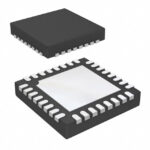 ACT8865QI305-T
The activity of extra discounts on wholesale prices is in full swing…
Please fill in your contact information and we will send you the latest wholesale price list.





