 ChipApex | Global Electronic Components Supplier
SEARCH
Search Product
Search Post
— IC芯片 | 连接器 | 传感器 | 被动器件 —
Search productSearch post
— IC芯片 | 连接器 | 传感器 | 被动器件 —
Consult the customer manager about the wholesale price.
consultation hotline:86-132-6715-2157
email:[email protected]
Contact the product manager for consultation. One-stop consultation is available.
Do you want a lower wholesale price? Please send us your inquiry and we will reply immediately.
The AD14060BF-4 is a Quad-SHARC DSP multiprocessor module integrating four ADSP-21060 cores within a single hermetic package. It delivers 480 MFLOPS peak performance with a 25 ns instruction rate and includes 16 Mbits of shared on-module SRAM. The device supports both 5 V and 3.3 V operation, featuring twelve 40 MB/s link ports, independent serial ports, and a common serial port. It utilizes a 308-lead ceramic quad flatpack (CQFP) with a 0.160-inch low profile and 25 mil lead pitch for high-density applications.
Verify the specific grade (B or K) and voltage compatibility (5 V vs. 3.3 V) required for the target application before procurement. Confirm that the host system supports the 308-lead CQFP form factor and hermetic packaging requirements. Ensure that the development environment includes appropriate tools for the ADSP-21060 architecture, such as JTAG emulators and compiler suites compatible with the Quad-SHARC configuration.
Select the AD14060BF-4 when a single-package solution for four SHARC processors is needed to minimize board space and interconnect complexity. Choose this component over discrete ADSP-21060 chips if the design requires integrated shared SRAM and pre-routed link ports. Consider the B Grade (-40°C to +100°C) or K Grade (0°C to +85°C) based on the specific case operating temperature constraints of the final assembly.
The AD14060/AD14060L represents the first generation of high-performance DSP multiprocessor modules from Analog Devices. Built around the ADSP-21060 core, it was designed to offer the highest performance-to-density ratio in its class. This module simplifies the implementation of complex multiprocessor systems by embedding power planes, matched impedance interconnects, and optimized signal routing directly within the package.
The AD14160 is a similar Quad-SHARC module available in a different package format. For discrete replacements, individual ADSP-21060 processors can be used, but this requires external implementation of the shared bus, SRAM, and link port interconnections, significantly increasing board complexity.
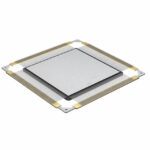 AD14060BF-4
The activity of extra discounts on wholesale prices is in full swing…
Please fill in your contact information and we will send you the latest wholesale price list.







