ChipApex | Global Electronic Components Supplier
SEARCH
Search Product
Search Post
— IC芯片 | 连接器 | 传感器 | 被动器件 —
Search productSearch post
— IC芯片 | 连接器 | 传感器 | 被动器件 —
Consult the customer manager about the wholesale price.
consultation hotline:86-132-6715-2157
email:[email protected]
Contact the product manager for consultation. One-stop consultation is available.
Do you want a lower wholesale price? Please send us your inquiry and we will reply immediately.
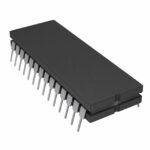
The AD1671KQ is a monolithic 12-bit, 1.25 MSPS analog-to-digital converter manufactured by Analog Devices Inc. It integrates a high-performance sample-and-hold amplifier (SHA) and an internal voltage reference within a single chip. The device utilizes a subranging flash conversion technique with digital error correction to achieve its speed and accuracy. Key electrical specifications include a maximum conversion time of 800 ns, ±2.5 LSB integral nonlinearity (INL), and a signal-to-noise plus distortion ratio of 71 dB at a 100 kHz input frequency. It operates on +5 V analog and digital supplies with a typical power consumption of 570 mW.
Verify the specific suffix 'KQ' corresponds to the required performance grade and package type. The 'K' grade specifies ±2.5 LSB INL, while 'Q' indicates a 28-pin ceramic dual in-line package (CDIP). Confirm that the operating temperature range of 0°C to +70°C meets system requirements. Ensure supply voltages are strictly maintained within specified limits to prevent damage.
Select the AD1671KQ when a complete 12-bit ADC solution with integrated SHA and reference is needed. Choose this model over the J-grade if tighter integral nonlinearity specifications are required. Consider the KQ package for through-hole mounting needs. Evaluate power dissipation constraints, as the device consumes approximately 570 mW. Verify compatibility with parallel digital interfaces and logic voltage levels.
The AD1671 series represents a family of monolithic A/D converters designed using Analog Devices' ABCMOS-1 process. This technology combines high-speed bipolar circuitry for linear sections with low-power CMOS for logic. The KQ variant is part of the commercial temperature range lineup, offering enhanced linearity compared to the standard J-grade devices. It serves as a cost-effective alternative to hybrid implementations while maintaining high reliability.
Publicly confirmed substitute part numbers for the AD1671KQ are not available in the provided documentation. Users should consult official Analog Devices resources for current cross-reference information.
 AD1671KQ
The activity of extra discounts on wholesale prices is in full swing…
Please fill in your contact information and we will send you the latest wholesale price list.