 ChipApex | Global Electronic Components Supplier
SEARCH
Search Product
Search Post
— IC芯片 | 连接器 | 传感器 | 被动器件 —
Search productSearch post
— IC芯片 | 连接器 | 传感器 | 被动器件 —
Consult the customer manager about the wholesale price.
consultation hotline:86-132-6715-2157
email:[email protected]
Contact the product manager for consultation. One-stop consultation is available.
Do you want a lower wholesale price? Please send us your inquiry and we will reply immediately.
The AD1928YSTZ is a high-performance, single-chip audio codec manufactured by Analog Devices Inc. It integrates two differential-input analog-to-digital converters (ADCs) and eight single-ended-output digital-to-analog converters (DACs). The device utilizes a multibit sigma-delta architecture with 24-bit resolution and supports sample rates from 8 kHz to 192 kHz. It operates on a single 3.3 V supply for both analog and digital sections. Key electrical specifications include a typical dynamic range of 107 dB for the ADC and 108 dB for the DAC, with a total harmonic distortion plus noise of −94 dB. The component is housed in a 48-lead LQFP package.
Verify component authenticity and datasheet revision status prior to integration. Confirm that the specific ordering suffix matches the required package and temperature range. Check for obsolete status or lifecycle changes as availability may be restricted. Ensure supply chain documentation aligns with current manufacturing standards.
Select this component for applications requiring high channel count with differential ADC inputs and single-ended DAC outputs. Verify compatibility with system voltage levels, noting tolerance for 5 V logic inputs. Evaluate power consumption requirements against the specified normal operation and power-down currents. Ensure the host processor supports the required SPI interface and TDM modes if multi-channel expansion is needed.
The AD1928 belongs to the AD1928 series of audio codecs from Analog Devices. It is part of a family that includes variants with differential DAC outputs and different control interfaces. This specific model focuses on providing eight stereo DAC channels alongside dual stereo ADCs within a compact 48-lead LQFP footprint.
Direct substitute part numbers are not explicitly confirmed in the provided source material. Review the manufacturer's ordering guide for alternative members of the AD1928 family, such as versions with differential DAC outputs, to ensure functional equivalence before substitution.
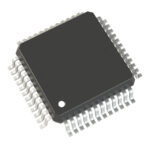 AD1928YSTZ
The activity of extra discounts on wholesale prices is in full swing…
Please fill in your contact information and we will send you the latest wholesale price list.






